American Renaissance
Previous Story       Next Story       View Comments       Send This Page       Date Archives       Category Archives

The Threat of Puerto Rican Statehood

More news stories on Hispanic Immigrants

James P. Lubinskas, American Renaissance, March 1998
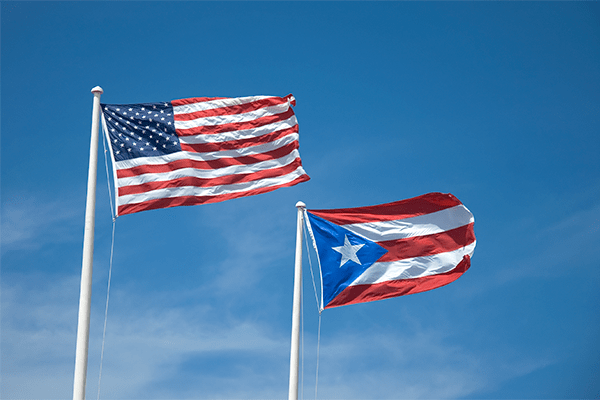
Within the next few months Congress is likely to vote on a bill that would make Puerto Rico our 51st state. If it passes, the United States will be importing AIDS, crime, poverty and other Third-World problems. Four million Spanish-speakers who don’t even consider themselves Americans, would gain political representation at the expense of current citizens. Astonishingly, Republicans and Democrats alike support this bill.

Citizens by Law

Although Puerto Ricans are U.S. citizens by law, the island is not a state but a commonwealth. It is closely associated with the United States but is not a permanent part of the Union, and it does not have the same rights and responsibilities as a state.

In 1898, during the Spanish-American War, American forces occupied Puerto Rico after an invasion that met only token Spanish resistance and was generally welcomed by Puerto Ricans. After the war, Spain ceded the island to the United States, which ruled it as a territory with an appointed governor. In 1952, Congress made it a self-governing commonwealth on terms that were overwhelmingly approved by Puerto Ricans in a referendum.

As citizens of a commonwealth, Puerto Ricans pay no U.S. income taxes and do not vote in U.S. elections (though they do send a “resident commissioner” to Congress, who votes only in committee). They are eligible for some handout programs like food stamps—over half the island’s residents get them—but the amount of welfare can be capped by Congress. Until 1996 Puerto Rico’s economic development was enormously stimulated by a different handout program: U.S. companies were exempted from federal income tax on profits earned in the commonwealth, and many moved operations there.

Resentment

Despite the obvious economic benefits of association with the United States, many Puerto Ricans deeply resent “colonization.” As Ricardo Alegria, the founder of the Center for the Advanced Study of Puerto Rico and the Caribbean says, “We weren’t Alaska, Hawaii, Arizona or New Mexico. We weren’t some sparsely settled frontier. We were a nation when the United States arrived. . . . There will always be ethnic tension here if they try to make us a state.” In 1993, Renan Soto, the president of the Puerto Rican Federation of Teachers claimed, “Since that Sunday, July 25 of 1898, when we were invaded by the North Americans, Puerto Rico has been the victim of constant cultural aggression and intense publicity directed toward eliminating our language, Spanish.”

The most prominent expression of Puerto Rican resentment is the independentista movement. In 1950, some of its members nearly succeeded in assassinating President Harry Truman. Four years later, Puerto Rican terrorists started shooting from the visitors’ gallery in the House of Representatives, and wounded five members of Congress. To this day, the Puerto Rican independence movement is the leading source of domestic terrorism in the U.S. As Scott McConnell pointed out in an editorial that got him fired from the New York Post, “Puerto Ricans continue to revere as nationalist heroes several martyr-figures whom most Americans would view simply as terrorists.” Mr. McConnell found that Puerto Rican nationalism quickly takes the form of accusations of “racism.” Much like black groups, Puerto Ricans treat criticism as an attack on “la raza” to be dealt with by stern means.

Puerto Ricans have a deep attachment to culture, race and language. They see themselves, correctly, as members of a distinct Latino-Caribbean culture that cannot mesh with traditional Anglo-America. As Ruben Berrios Martinez, the leader of the Puerto Rican Independence Party, writes, “Puerto Rico’s heart is not American. It is Puerto Rican. The national sentiment of Puerto Ricans is entirely devoted to our patria, as we call our homeland in Spanish, our language. We are Puerto Ricans in the same way that Mexicans are Mexicans and Japanese are Japanese. For us, “we the people’ means we Puerto Ricans.”

Puerto Rican nationalism is perhaps on most obvious display during the Olympic Games; the island fields its own “national” team, and Puerto Ricans cheer the loudest when their teams face the United States. Puerto Rico also participates independently in international beauty pageants.

Puerto Ricans take fierce pride in their language. The whole island speaks Spanish, with only about 20 percent of the population fluent in English. This number has stayed the same for many years, since most Puerto Ricans do not want to learn English.

Until 1990, Puerto Rico had two official languages, Spanish and English. In that year, in a fit of linguistic chauvinism, the commonwealth demoted English and established Spanish as the sole official language. In 1993, pro-statehood forces captured the governorship and decided that an officially bilingual Puerto Rico would have a better chance at statehood. English was reinstated, but met huge resistance, including one anti-English rally that drew 100,000 people. Puerto Rico is officially bilingual again but in practice it remains Spanish-speaking.

Not even pro-statehood Puerto Ricans have any intention of abandoning Spanish, which they consider integral to their identity. The current governor, Pedro Rossello, who campaigns for statehood, has nevertheless written: “Spanish belongs to all Puerto Ricans, it is not negotiable under any circumstance or political status.” With Puerto Rico as a “state,” English-speaking Americans could conceivably find themselves in a part of their own country where not even the court system operates in English. They would need an interpreter to answer a summons for a traffic ticket.

Welfare Culture

If Puerto Ricans are so nationalistic why should there be any interest in statehood at all? The answer is money. If Puerto Rico becomes a state, Uncle Sam’s entire welfare bonanza will be available—including the Supplemental Security Income (SSI) program that has seen such spectacular abuse. Puerto Ricans would have to start paying federal income taxes, but this would be made up many times over in increased government handouts. An August, 1996, report from the General Accounting Office (GAO) indicates that Puerto Ricans would pay an estimated $49 million in income taxes but would get an additional three to four billion from taxpayers in the rest of the country.

Loyalty to the U.S. is hardly the main argument for statehood. In his aptly titled book Statehood Is for the Poor, former governor and current congressional delegate Carlos Romero-Barcelo writes:

“Puerto Rico’s per capita contribution to the federal treasury, were we a state, would come to less than that of any state in the Union. At the same time, the per capita benefits we’d reap from federal aid programs would be greater than those of any state in the Union. On top of all this, we’d also have seven or eight Puerto Ricans serving as full voting members of Congress, working up in Washington at all times to help draft and pass new and improved social welfare legislation.”
Mr. Romero-Barcelo means what he says. In 1974, when he was governor, he sued the U.S. government to extend food stamp availability to every town in Puerto Rico. He won in federal court and his victory cost the U.S. taxpayers $500 million in that year alone. Puerto Rican author Robert Fernandez notes that some aid centers in the capitol city of San Juan alone handle more “clients” than the entire state of Texas.

Puerto Ricans also have very high rates of AIDS, drug abuse, crime, poverty, illegitimacy, and unemployment. If Puerto Rico were a state, its AIDS rate (58 per 100,000 inhabitants) would make it third in the nation after New York (69 per 100,000) and Washington D.C. (220 per 100,000). In 1991 the island had a drug addiction rate of 1,972 per 100,000, compared to the U.S. rate of 1,176 per 100,000. In 1993, the Puerto Rican murder rate was more than two and a half times that of the U.S: 24 per 100,000 compared to nine. In 1995 Puerto Rico’s per capita income was $7,670, which was less than half that of Mississippi, our poorest state. While unemployment in the U.S. is running around five percent, unemployment on the island approaches 20 percent.

Puerto Ricans who move to the United States fare worse in some respects than those who stay behind. While the illegitimacy rate on the island is already high at 30 percent, the figure doubles to 60 percent for Puerto Ricans on the mainland. In New York City, where all U.S. welfare programs are available to them, Puerto Ricans are more likely than blacks to be on welfare. If statehood is anything like moving to the mainland, Puerto Ricans may be courting more trouble than they realize.

Prospects for Americans

The vote on the Puerto Rican statehood bill (HR-856) was originally scheduled for after Labor Day, 1997, but was delayed because of grassroots political action by, among others, English First and the Council of Conservative Citizens. But a delay does not kill a bill; Congress could well vote on it this spring, on very little notice.

The bill’s chief sponsor is Don Young (R-Alaska) and it is co-sponsored by such Republican leaders as Newt Gingrich and Tom DeLay. The Speaker of the House rarely cosponsors legislation, so this is a sure sign that it is a priority for the GOP. Supposedly conservative Republicans are probably supporting statehood for “the welfare capital of the Caribbean,” as part of the party’s ever-growing commitment to “diversity.” Indeed, GOP pollster Frank Luntz recently urged the party to push for Puerto Rican statehood in order to win Hispanic votes.

With both political parties apparently in favor of statehood, and columnists who write honestly about its implications losing their jobs, prospects for the bill are good. Statehood would probably prove Mr. Romero-Barcelo correct: Eight liberal Democrats (two Senators and six Congressmen) would go to Washington to help pass “improved social welfare legislation.” Because current law limits the number of seats in the House of Representatives to 435, real Americans would lose a congressman for every one Puerto Rico got. The Congressional Research Service projects that the losses would come from six states: Mississippi, Florida, Oklahoma, Tennessee, Washington and Wisconsin.

The new Democratic non-white members of Congress would be an important step towards the Republican party’s long march toward permanent minority status, and the Puerto Rico delegation could be counted on to vote for every program the left espouses, from affirmative action and mass immigration to gun control and support for the U.N. A strengthened and increased Hispanic lobby would probably press hard for more U.S. foreign aid to its racial brothers in Latin America. Multiculturalism and official bilingualism would become, in effect, the law of the land. Appeals to tradition would be meaningless if one of our states had a Latino-Caribbean culture and spoke Spanish.

At the same time, statehood could very well invite precisely the kind of intractable ethnic conflict that now causes so much bloodshed all around the world. Although the independentistas do not get much popular support, they are desperate and determined men. As a spokesman, Carlos M. Ayes, warns, “Statehood will mean war. Violence is hard to stomach, but George Washington killed thousands of British to gain recognition for 13 colonies that claimed the right to be independent. If the United States wants its very own Northern Ireland let them continue this farce.”

Puerto Rico is an alien island with a people, language, culture, and traditions incompatible with the United States. We should be preparing it for independence, not statehood. This plan to absorb four million Third-Worlders is one of the most obviously misguided and potentially destructive pieces of legislation likely to come before Congress this year. It is entirely possible that the bill could come to a vote with only minimal discussion or debate—just like the 1965 immigration act. The media will not discuss its implications honestly, so it will be up to every patriotic organization in the country to see to it that this legislation is shown to be the awful idea that it is and to halt it in its tracks.

Original article

(Posted on May 29, 2009)

     Previous story       Next Story       Post a Comment     Send This Page      Search

Comments

1 — GA Peach wrote at 7:17 PM on May 29:

Despite the obvious economic benefits of association with the United States, many Puerto Ricans deeply resent “colonization.”

On that note: American’s resent BEING currently colonized by angry illegal aliens, the bulk from Mexico!

Too bad White Americans don’t have the same attitudes as the Puerto Ricans when it comes to their language, culture, nation and race!

We would do well to learn from them. And let’s keep Puerto Rico, its own country and we can live separately and might actually enjoy each others country, do trade and commerce with all…..Sounds fair and respectful to me.

Aside from that, if Puerto Rico in fact does become a state, many white Americans will have NO money left after taxes because we will indeed have to support them.

2 — Anonymous wrote at 7:25 PM on May 29:

Adding to the insanity while America burns. Do not the average White in this country EVER ask themselves why we (as a race) are being replaced and have been for the last 40 years or so? Are they happy to be paying for their own destruction? How about their children and their own future? Does it not matter any longer?

3 — Anonymous wrote at 7:38 PM on May 29:

Hmm, not many Puerto Ricans are fluent in English, yet 50% of Puerto Rican’s receive assistance from the US Federal Government… I sense room here for a program to encourage more Puerto Ricans to speak English… A ‘Convergence’ if you will. But, that would that would be chauvinism encouraging the use of English. Only Americans or ‘Gringos’ as it were, must be encouraged to expand their horizons. More and more, as a requirement to get a job in their own country.

4 — Jim wrote at 8:24 PM on May 29:

By all definitions, Puerto Rico is a nation. It has its own distinct language, literature, music, and history. It would not make a viable state. Therefore, we should simply grant Puerto Rico independence and allow it to go its own way. Plus all Puerto Ricans living in this country could go back to their “motherland”. I’ll buy a one-way tickets for several of them.

5 — Great White Observer wrote at 9:59 PM on May 29:

People in New York are constantly bombarded with Puerto Rican’s telling us about Puerto Rican pride and how proud they are to be Puerto Rican. What is meant by this I will never understand. How so many men of one ethnic group could impregnate so many women and just walk away to leave the child and woman to survive on welfare is beyond me, it certainly doesn’t impress me as some- thing to be proud of. So I think the greatest symbol of Puerto Rican pride would be the independent nation of Puerto Rico.

6 — Anonymous wrote at 10:56 PM on May 29:

I say “let them GO on their own instead of making them a state.” All too often USA is baited to get involved in ‘other’ cultures/nations for financial benefits for outsiders. Then they blame US for all their problems. USA was founded by white English speaking peoples. Now, we are asked to give away our culture and nation to please all these ‘OTHERS’. It is best for US to keep its own council just as founders instructed. The opposition is taking US in the opposite direction. It will be devastating for white English speaking people. Our country is being stolen from US through white hating immigrant legislation. V

7 — Anonymous wrote at 11:20 PM on May 29:

“Puerto Ricans have a deep attachment to culture, race and language. They see themselves, correctly, as members of a distinct Latino-Caribbean culture that cannot mesh with traditional Anglo-America.”

Maybe if we ask them nicely they could send teachers to America and show Whites how to be a people again.

8 — Anonymous wrote at 11:33 PM on May 29:

I can’t for the very life of me see what advantage the United States ever obtained from acquiring Puerto Rico. Is there oil there? Some precious natural resource? Was it a strategically key island like Malta was for Britain? The island has just been a drain for America from day one. Nothing more. Let it go.

9 — June wrote at 10:34 AM on May 30:

I think it was Theodore Roosevelt who spoke against “foreign entanglements.” He must have looked into the future of this country. What have we become? I looked in vain at the market yesterday for produce raised in this country. There was none to be found. Most comes from Mexico, with the Latin American countries following. Do we no longer produce our own food? Clothing comes from third world countries and looks it. Our appliances come primarily from China. Are we left to be just a supplier of money for those who seek to overcome us? If the present trend continues, we will be strangers in our own land. In many states this has already happened. Yet we continue to elect those who are willing to sell out to the highest bidder. They’ve sold their patriotism and honor at the same time.

10 — chief wrote at 12:48 PM on May 30:

Adding to the insanity while America burns. Do not the average White in this country EVER ask themselves why we (as a race) are being replaced and have been for the last 40 years or so? Are they happy to be paying for their own destruction? How about their children and their own future? Does it not matter any longer?

Posted by Anonymous at 7:25 PM on May 29

A lot of white Americans do. The question is how do we unite? I suppose we can start by subscribing and supporting organizations like this one but being active is where it really is I suppose in that respect we can attent the yearly conference of this organization which i plan to do as soon as I am able. where do we go from there though? What framework has been laid into place for us to become a part of? To unify regardless of any of our minor difference to address some common problems and issues that we all face regardless of our petty differences?

11 — Flaxen-headed Strumpet wrote at 4:32 PM on May 30:

Does anyone care to guess how much money it would take to induce the Spanish government to accept contemporary colonial control/responsibility for Puerto Rico and then figure out how to procede forward?

12 — EW Rodier wrote at 5:44 PM on May 30:

In the 50 States we have all races, nationalities and religions. The thing that binds these 50 states is the English Language. If we admit a Spanish speaking state then we become the Balkans. And soon states with large Sapinsh speaking populations will want to have Spanish as their main language. I foresee California, Arizona, New Mexico, Texas becoming Spanish speaking states. That dear friends is the end of America as a solid and unified country. We will have the Balkans with all their attendant hatreds and wars. Let’s not hurry to Mexifornia yet.

13 — Anonymous wrote at 5:46 PM on May 30:

>>>>>I looked in vain at the market yesterday for produce raised in this country. There was none to be found. Most comes from Mexico, with the Latin American countries following. Do we no longer produce our own food?

I was told by someone in a small market the other day that most of our best produce goes to Japan and Europe because American farmers and corporations can make more money selling the produce there. Then, Americans get to have produce from Mexico and Latin America.

Whether that’s the whole story I don’t know but I have wondered for some time now why there is so little American produce in our grocery stores when we grow so much here in the United States.

14 — Soprano Fan wrote at 6:58 PM on May 30:

To June:

Actually, it was John Adams who warned America about becoming enmeshed in “foreign entanglements”.

Anonymous, I think the reason the USA hangs onto Puerto Rico, and even considers making it a state is because they do not want the island to be influenced in any way, shape or form by Cuba. That’s why they don’t just flat-out grant independence to Puerto Rico - they don’t want to see it become a Cuban satellite state.

Look at Hawaii. After Pearl Harbor, the USA resolved to make Hawaii a state- of course, it took 14 years, after the end of World War II. But it gave the USA a permanent presence in the Pacific region, helped along by Mao’s takeover of Mainland China, the Korean War and the Vietnam War.

15 — SKIP wrote at 8:00 PM on May 30:

But it gave the USA a permanent presence in the Pacific region, helped along by Mao’s takeover of Mainland China, the Korean War and the Vietnam War.

We had a permenant base in the Pacific rim, we called it Subic Bay, Philippine Islands. The Philippinos wanted us out, we left, and they have suffered the financial repercussions since then. The same situation now exists in Hawaii, and with Hawaii’s enacting a “Islam Day” I say, let the Japanese have it back.

16 — SKIP wrote at 8:03 PM on May 30:

our best produce goes to Japan and Europe because American farmers and corporations can make more money selling the produce there. Then, Americans get to have produce from Mexico and Latin America.

I can tell you that the vegetables, bottled water (initially) and fruits used in the mess halls of Iraq and Afghanistan I have seen “Product of Australia” on most of it. I have seen trucks purchased by U.S. contractor companies with “Product of Iran” being bought for U.S. military use in Afghanistan. I questioned this and my contract was ended!

17 — flyingtiger wrote at 11:02 PM on May 30:

The reason we have PR is that Sanjaun has one of the best harbors in the western hemisphere. Controlling San Juan and new york city harbor was part of our hemispheric defense system. This was important in the age when ships needed coal and then oil. If the Kaiser wanted to invade the US, he would have to recoal at San Juan just to get to the US. For reference, check out War Plan Black by Avalance Press. A hurricane interrupted by refueling schedual… you don’t need to know the rest.
Nowadays, with modern aircraft, I don’t think we need PR anymore. Lets give it back to Spain…wait that would be too mean.

18 — Lakeview Senior wrote at 9:48 AM on May 31:

If you work with Puerto Ricans you will soon find out how much they hate the United States. Some years ago in Chicago a local newspaper ran an article about how Puerto Ricans were encouraged to wipe their feet on an American flag at a rally held in the newly built Roberto Clemente High School while verbalizing the words, “America-ca-ca” to everyone’s delight in the audience. Of course it was denied by their political leaders such as Congressman Guitierrez. (Hope I got his name speelled correctly). Of course, the white politicians toned it all down and the story soon got old and nobody paid much attention to it anymore.

Under the current Mayor, Richard M. Daley, the Puerto Ricans get a huge number of good paying City jobs. They also earn 5% more than their White counterparts doing the same job because they are bi-lingual. This law was passed by our City council without a word of opposition. The 5% may not sound like much but over the years that amount of extra money received via a pension will be considerable. By the way, they don’t have to pass any test showing that they are sufficient in either language, just have a Spanish sounding name. Of course if you are a White American(especially White male)you DO NOT qualify for that perk).

It is not safe for a White person to go into their neighborhood either due to the gang problems, drive-by shootings, etc. Back in 1976 the taxpayers paid close to a million dollars to erect sculptures of the Puerto Rican flags on a busy throughfare eight blocks apart in their barrio because they demanded it from the City government. There was almost a riot when the White construction workers who built the things topped off their work with an American flag. The riot police had to be called out to protect the White workers. Can you imagine what it will be like if and when they get statehood. Or if Ms. Sotomayer gets a seat on the Supreme Court.

19 — Anonymous wrote at 11:41 AM on May 31:

Puerto Rican’s don’t hate America. They just Love Puerto Rico and Puerto Rican’s.

20 — Anonymous wrote at 4:20 PM on May 31:

Puerto Rico has racial problems of their own do they not?

21 — Brendan wrote at 4:53 PM on May 31:

According to Wikipedia, Puerto Ricans are starting to suffer a demographic collapse, especially on their home island. Maybe they’ll have Cuba- or Spain-style birth rates in a decade or so and then we won’t have to worry about them anymore.

22 — Anonymous wrote at 5:19 PM on May 31:

Gee, Officer Krumke lyrics from the movie “Wset side Story”:

TIGER, IMITATING KRUPKE
Hey you!
RIFF
Who me, Officer Krupke?
TIGER, IMITATING KRUPKE
Yeah you, gimme one good reason for not draggin’ ya down the station house, ya punk!
RIFF
Dear kindly Sergeant Krupke
You gotta understand
It’s just our bringin’ upke
That gets us out of hand
Our mothers all are junkies
Our fathers all are drunks
Golly Moses, natcherly we’re punks
JETS
Gee, Officer Krupke
We’re very upset
We never had the love
That every child oughta get
We ain’t no deliquents
We’re misunderstood
Deep down inside us there is good
RIFF
There is good!
JETS
There is good, there is good
There is untapped good
Like inside, the worst of us is good
TIGER, IMITATING KRUPKE
That’s a touching good story
RIFF
Lemme tell it to the world!
TIGER, IMITATING KRUPKE
Just tell it to the judge
RIFF
Dear kindly Judge, your Honour
My parents treat me rough
With all their marijuana
They won’t give me a puff
They didn’t wanna have me
But somehow I was had
Leapin’ lizards, that’s why I’m so bad
SNOWBOY IMITATING JUDGE
Right! Officer Krupke
You’re really a square
This boy don’t need a judge
He needs an analyst’s care
It’s just his neurosis
That oughta be curbed
He’s psychologically disturbed
RIFF
I’m disturbed
JETS
We’re disturbed, we’re disturbed
We’re the most disturbed
Like we’re psychologically disturbed
SNOWBOY IMITATING JUDGE
Hear ye, hear ye. In the opinion of this court, this child is depraved on account he ain’t had a normal home.
RIFF
Hey, I’m depraved on account I’m deprived!
SNOWBOY IMITATING JUDGE
So take him to a headshrinker. You!
ACTION
Who me?
RIFF
My daddy beats my mommy
My mommy clubbers me
My grand’pa is a commie
My grand’ma pushes tea
My sisters wears a moustache
My brother wears a dress
Goodness gracious, that’s why I’m a mess
ACTION IMITATING HEADSHRINKER
Yes, Officer Krupke
He shouldn’t be here
This boy don’t need a couch
He needs a usefully career
Society’s played him a terrible trick
And sociologically he’s sick
RIFF
I am sick!
JETS
We are sick, we are sick
We are sick sick sick
Like we’re sociologically sick
ACTION IMITATING HEADSHRINKER
In my opinion, this child does not need to have his head shrunk at all. Juvenile delinquency is purely a social disease.
RIFF
Hey, I got a social disease!
ACTION IMITATING HEADSHRINKER
So take him to a social worker
RIFF
Dear kindly social worker
They tell me get a job
Like be a soda jerker
Which means I’d be a slob
It’s not I’m antisocial
I’m only anti-work
Glory Osky, that’s why I’m a jerk
A-RAB
Eek, Officer Krupke
You’ve done it again
This boy don’t need a job
He needs a year in the pen
It ain’t just a question of misunderstood
Deep down inside he’s no good
RIFF
I’m no good
JETS
We’re no good, we’re no good
We’re no earthly good
Like the best of us is no damn good
The trouble is he’s lazy
The trouble is he drinks
The trouble is he’s crazy
The trouble is he stinks
The trouble is he’s growing
The trouble is he’s grown
Krupke, we’ve got troubles of our own
Officer Krupke
We’re down on our knees
RIFF
‘Cause no one wants a fella
With a social disease
JETS
Dear Officer Krupke
What are we to do?
Gee, Officer Krupke
Krup you!

23 — Anonymous wrote at 6:26 PM on May 31:

AS my sister said when some Puerto Ricans in Chicago marched in favor of Independence;

You want to leave? Please, please, how can I help!

24 — Anonymous wrote at 9:54 PM on May 31:

I don’t see where Peurto Rico is doing America any good at all. I don’t blame Peurto Rico for this. I just don’t see any value in the connection at all….

25 — ghw wrote at 3:02 PM on June 1:

I have known many Puerto Ricans over the years, and have been in Puerto Rico many times. There are good ones and bad ones, nice ones and nasty ones. I have known some very fine ones, and also the reverse. I can’t make any generalized comment about them, or their politics. However, if they want to leave, I say let them leave. But I notice — particularly in Puerto Rico itself — that it is the radicalized, trendy “intellectuals” and campus types who are most vociferously in favor of “Independencia”. These are the politicized ones. And these tend to be the whitest and the upper class! I cannot recall encountering this feeling among any Puerto Ricans whom I have known on the US mainland. In fact, most of those living here seem to be apolitical (aside from superficial flagwaving and “Puerto Rican Pride” parades). As always, there are a few very political fanatics, but they are a tiny minority and do not represent the rest. Most don’t even have any political opinions.

Anonymous said above, “I don’t blame PR for this”. I agree. It seems to be a case where powerful elements have their own interests at stake and want to hold together the crumbling American multi-culti “empire” at any cost. The interests of “the people” — both in Puerto and the US — are not considered relevant.

As I’ve mentioned here before, in any marriage both parties have to be asked their consent. It’s an invalid marriage if the consent of BOTH marties is not given. So it’s very strange indeed that in this “wedding” only Puerto Rican interests and feelings are consulted. No one has asked the American people what we want. It’s accepted as a foregone conclusion that we want this union, but do we? Many Americans do not. This cannot be mentioned in the major newspapers. As I recall, Joe Sobran was fired from his job at the NY Post because he made this fundamental mistake.

26 — Sardonicus wrote at 3:32 PM on June 1:

Puerto Rico is a relic of American Empire and should be granted immediate independence. Puerto Rico’s culture, language and history belong to the Spanish Caribbean not the United States. As I understand it, most Puerto Ricans do not pay Federal income taxes. Puerto Ricans are both a drain on our economy and lessen our cohesion as a nation. I agree with Puerto Rican nationalists who demand independence from Los Estados Unidos.


Home      Top      Previous story       Next Story      Send This Page      Search