Who’s White; Who’s Not?
Jon Harrison Sims, American Renaissance, June 2011
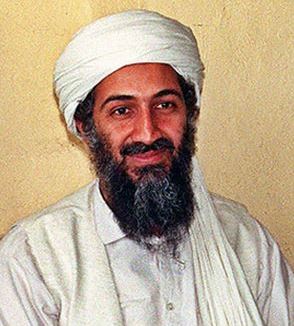
White. . . according to our government. (Credit Image: Hamid Mir/Wikimedia)
Those of us who care about the future of our country and our people have no source but the US census for information about demographic change. The problem, of course, is that for years, the racial categories for the census have been neither scientific, consistent, nor rational. Therefore, it takes some sleuthing to get a sense of the actual number of whites in America — those I would define as descended on both sides from white-skinned people of European origin.
One problem is subjectivity. Before 1960, census takers, who were known as enumerators, looked people over and determined their race according to instructions provided by the bureau. Since 1960, respondents have chosen their own race, and this makes the statistics less reliable.
Back when the country was essentially white and black with a few Indians, census categories were reasonably clear, and people of pure Spanish ancestry were categorized as “white” wherever they were born or came from. Hispanics, however, began to bedevil the process earlier than most people realize. A “Mexican” category first appeared in instructions for enumerators for the 1930 Census, and was described as “a racial mixture difficult to classify.” Anyone enumerators found who was “not definitely white, Negro, or Indian. . . should be returned as Mexican (Mex.).”
The Mexican government lodged a formal protest with the State Department for the perceived slight of being considered non-white. Therefore, in 1940, the bureau dropped the Mexican category and told enumerators that “Mexicans are to be regarded as white unless definitely of Indian or other nonwhite race.” The same practice was followed in 1950. In 1960, the first year Americans chose their own race, there was no category for Mexicans or Central/South Americans. Presumably, they called themselves “white.”
“Hispanic” appeared for the first time in the 1970 census with the question, “Is this person’s origin or descent. . . Mexican, Puerto Rican, Cuban, Central or South American, ‘Other Spanish,’ or ‘No, none of these’.” Ever since, as if the Census Bureau were celebrating the enormous growth of the Hispanic population, the very first question it asks about race or ethnicity is whether someone is Hispanic. 2000 was the first year the census used the preposterous term “Latino,” which now appears to be a permanent fixture.
At this initial separation, those who are not Hispanic check “No,” and go on to the next question that asks specifically about race. Those who check “Yes,” have four choices: Mexican, Puerto Rican, Cuban, or “another Hispanic, Latino, or Spanish origin.” Anyone in the “another” category is supposed to write in his nationality of origin. There is room for more than one, so someone whose father was Colombian and mother was Dominican could write in two nationalities.
Both Hispanics and non-Hispanics answer Question 9, the race question. The Census Bureau tells us that Hispanics can be of any race, but it is clear that the form pushes them to call themselves white — most are obviously not black, or some other category such as Chinese or American Indian.
Hispanics do have the option of choosing more than one race or the “Some other race” category. “Some other race” first appeared in the 2000 census, and that year, 42 percent of Hispanics chose it. The information about what race they claimed to be — Latino, Hispanic, Mexican? — is not easily available, but 97 percent of the 15.3 million people who chose that category — 5.5 percent of the population — were Hispanic. Forty-seven percent of Hispanics said they were white, with the remaining 11 percent scattered among other races. A dark-skinned Dominican, for example, could conceivably describe himself as black.
Understandably, Hispanics complain about the race options available to them. Who wants to belong to “Some other race?” In a March 11, 2011, letter to USA Today, a Hispanic whose family emigrated from El Salvador complained that most people like him “had no choice but to select ‘white’ as their race.” He asked his local census office for advice, and “a representative explained that there was no better option for [him] than to choose white.” He didn’t like that: “To me, white doesn’t really describe my race at all.”
In the 2010 census, the “Some other race” category had grown to 19.1 million people, or 6.2 percent of the population. Again, it is not clear what “other race” people claimed, nor is it possible at this point to learn what percentage of those who chose that category were Hispanic. However, there is no reason to believe it was very different from the 2000 figure of 97 percent.
Of course, the census would be even more misleading without “Some other race,” because even more Hispanics would be forced into the “white” category, making the country appear less Third-World than it really is. Between 2000 and 2010, the Census Bureau tried to drop “Some other race” — one wonders why — but Congress intervened in 2006 to keep it. That was unusual. Executive-branch agencies such as the Office of Management and Budget usually set race categories; not Congress.
On the other hand, a growing number of Hispanics like to think of themselves as both Hispanic and white. According to Roderick Harrison, a demographer at Howard University and a former chief of the Census Bureau’s racial statistics branch, this means they “can identify as white without feeling that they are. . . in denial about their Hispanicity.” Slightly more than half of all Hispanics in fact call themselves white, and this greatly inflates the figure for whites.
| The Most Common Multiple Race Mixes | ||||||||
|---|---|---|---|---|---|---|---|---|
|
||||||||
Even more surprising, no fewer than 46 percent of the foreign-born population in the United States claim, at least on their census forms, to be white. What they might claim for race-preference purposes could be a different matter, but it suggests there is still a strong attraction to the idea of being white.
The Census Bureau has no biracial or mixed-race category, but it does let respondents choose more than one race for themselves and their children. This, along with “Some other race,” was the other big innovation introduced in 2000, and it was a response, in part, to the fact that in the 1990 census, half a million people disobeyed instructions to choose a single race, and chose more than one. In 2000, when they first had the opportunity to do so, 2.4 percent of Americans chose multiple races.
In the 2010 Census, the multi-racial category increased slightly to 2.9 percent. This is still an underestimate, since many mixed-race people identify with the race of just one parent. The most common mixes have not yet been released for 2010, but their percentages from 2000 are in the following table. In reality, the number of people who can claim both white and black ancestry is far greater than those who can claim to be white and Asian. Clearly, many prefer to call themselves black rather than multi-racial.
The government, at least unofficially, seems to be pushing this new, multiple-race category. In December 2010, before the results were in, Robert Groves, head of the US Census Department, was looking forward to a sharp increase. “I can’t wait to see the pattern of responses on multiple races,” he said. “That’ll be a neat indicator to watch.”
The Asian section of Question 9, the one about race, is undoubtedly the most incoherent part of the whole census form. Most people agree that white and black are races. (The inclusion of “Negro” as an option for black is not a careless anachronism. The Census Bureau surveyed a lot of blacks and found that many of them like to think of themselves as “Negroes.”) Most people would also agree that American Indians and Eskimos are yet another group different from blacks or whites. But there then follow 11 different racial categories just for Asians.
Virtually no one besides census bureaucrats thinks Japanese, Koreans, and Chinese are “races,” and the form goes on to underline this strange thinking by adding in the “Other Asian” section, “Print race, for example, Hmong, Laotian, Thai. . .”
These are, of course, nationalities, not races, and it is odd that Asians and Hispanics can list nationalities but whites and blacks cannot. In 2009, the US Commission on Civil Rights actually recommended that whites be given “analogous opportunities” to “specify any sub-group to which they belong,” such as “Irish, Swedish, or Arab.” Otherwise, “Some may be left with the impression that sub-groups, ethnicities, and ancestries within these categories [white and black] are less important, less worthy of attention or unlikely to suffer from discrimination on account of national origin. These are not impressions the Census Bureau should wish to leave.” The Census Bureau rejected this advice. Maybe whites will get that option when African immigrants get the option of writing in an African nationality.
The “black” category has traditionally been a consistent group composed of former slaves, but immigration is changing even this. Of the 37.3 million American blacks, more than 8 percent were born outside the United States; the figure was just 1 percent in 1960. Half of all foreign-born blacks are from the Caribbean and 34 percent are from Africa. There are now more than one million genuine African-Americans, in the sense that they were born in Africa and immigrated here. That is well over the estimated 800,000 Africans who were brought to North America during the slave trade.
The black and white categories suggest another — brown — and even though many Hispanics informally call themselves “brown,” that is not an option for the Census Department. Hispanics are therefore the largest group that does not fit logically into any of the department’s “races,” but there are others, and this means confusion for three more rapidly growing population groups: South Asians (e.g. sub-continental Indians, Pakistanis), North Africans, and Middle Easterners.
South Asians, according to the lower part of Question 9 on the census form, are treated as a subset of Asians. This means Northern Chinese and dark-skinned Dravidians from southern India are lumped together as “Asians,” even though they are listed on the census form as different “races:” Chinese and Asian Indian.
Arabs and Middle-Easterners obviously should have a category of their own. If Hmong and Laotians get their own designation, surely Arabs deserve one. Instead, by calling them “white,” the government has made that racial category so broad as to be almost meaningless. Thus, by Census Bureau decree, as soon as they set foot in the United States, Yemenis and Libyans become “white.” This may be flattering to them but bewildering to Americans, the vast majority of whom have no idea that, according to the government, their new Middle Eastern neighbors are fellow whites.
And consider the Pashtuns. This dark-skinned Islamic tribe straddles the Afghan-Pakistani border. According to the Census Bureau, Pashtuns who come from Afghanistan are white, while their cousins who come from Pakistan are Asian.
National Racial Percentages, 2010
The Census Bureau now releases two sets of data. One divides the population into seven racial categories but ignores Hispanics. The results for 2010 are:
| Racial Percentages (Without Hispanics) | ||||||||||||||
|---|---|---|---|---|---|---|---|---|---|---|---|---|---|---|
|
||||||||||||||
The second set of data lists Americans according to whether they are Hispanic or not, and results for 2010 are as follows:
| Hispanics and non-Hispanics | ||||||||||||
|---|---|---|---|---|---|---|---|---|---|---|---|---|
|
||||||||||||
Most American Hispanics are from Mexico and Central America, where there are few whites, and the whites rarely immigrate to the United States. Latin Americans also have an expansive conception of whiteness. Therefore, even though when they are forced to choose between “white,” “black,” and “other” about half of all Hispanics call themselves white, most whites would not put them in that category.
Combining data from the two sets we get this:
| More Meaningful Racial/Ethnic Figures | ||||||||||||||
|---|---|---|---|---|---|---|---|---|---|---|---|---|---|---|
|
||||||||||||||
The “Some other race” category has been removed because it mostly overlaps with Hispanics, and what remain are the racial/ethnic groups that make the most sense to Americans. The total adds up to 101.3 percent because the small number of Hispanics who identity as Black, Asian, or American Indian has not been removed from those groups. The Census Bureau could make that adjustment and release more meaningful numbers but it does not.
The non-Hispanic white category is the closest approximation of the actual percentage of whites in the country. There is some number of genuinely white Hispanics — those of pure Spanish heritage, Germans from South America — but they are greatly outnumbered by the North Africans, Middle-Easterners, South Asians, etc., who are counted as white. There are no precise figures for these populations, but there are, for example, an estimated 2.5 million Arabs, 2 million subcontinental Indians, and half a million Pakistanis living in the United States.
In 2010, the non-Hispanic white figure of 63.6 percent was down from 69 percent in 2000. Keep in mind that due to the dynamics of mass immigration and high fertility rates among immigrants, the percentage of non-Hispanic whites gets increasingly smaller for younger population groups. White newborns, for example, are a minority of their cohort the moment they are born.
The future of America is on display in California, where the non-Hispanic white population has fallen to 40.1 percent, and Hispanics have nearly overtaken us at 37.6 percent. Whites are fleeing the state. Over the last 10 years, the number of white Californians fell by 860,537. During that period there were slightly more white deaths than births, but the bulk of the decline represents whites who left the state. For whites, the California dream is over.
Welcome to the New America
On March 25, 2011 USA Today published an article called “Census: A new face of America ” by someone named Haya El Nasser. Mr. (or Miss?) Nasser starts the story thus: “The nation ended the first decade of the 21st century much the same way it did a century ago: as a strikingly more diverse and less rural nation.” Much the same way it did a century ago? The article draws a crude and misleading analogy between the post-Civil War era of mass immigration and our own post-1965 period, without mentioning that nearly all of the immigrants from that earlier period were white, European, and Christian while only a tiny percentage are today. And of course, the U.S. is no longer a nation; it is an empire.
Only further into the article do we get the real story, with a quotation from Robert Lane, an urban sociologist from the University of Nevada-Las Vegas. “2010 brings the next step in the American story,” he says. “This is the transformation of the U.S. into a post-European-dominated society.” But even here, there is deception, since the article uses the inflated 72.4 figure for the percentage of white. That, of course is the category that includes all the Hispanics who call themselves white — willingly or not. The more accurate, “non-Hispanic white” figure — which nevertheless inflated with Middle Easterners and North Africans — is 63.6 percent, and if immigration does not stop that number will keep falling.
Why Count by Race?
Since the chattering classes think race doesn’t exist or shouldn’t matter, why does the government even collect race data? A “panel of experts” meeting before the US Commission on Civil Rights in Washington, DC, in April 2006 answered that question. According to Kenneth Prewitt, a former director of the Census Bureau, it is “to inform the government. . . of any population groups suffering from discrimination.” Sharon M. Lee, a sociologist from Portland State University, explained that “racial statistics are now used to document racial discrimination, leading to new laws and policies to redress systematic racial inequalities.”
But how does knowing the racial makeup of the country “document racial discrimination?” Because according to the US government, everything should work by quota. If 16 percent of the population is Hispanic, 16 percent of everyone — from bum to banker — should be Hispanic. If fewer than 16 percent of the bankers are Hispanic, that is a prima facie case of discrimination, and the banks have to justify the difference. This is the primary official use of race statistics in the United States.
This, of course, is why every minority group wants its members to be counted (and wants them not to be counted as multi-racial). The more blacks there are in an area, the more jobs blacks can demand, and this puts pressure on the census. As Miss Lee of Portland State pointed out to the Civil Rights Commission, “satisfying advocacy and interest groups” is an important reason to count by race, but maintaining “scientific and statistical standards of data quality” is “a difficult balancing act.”
Former census director Prewitt went on to say: “Many thoughtful Americans, myself included, wish that anti-discrimination laws were not necessary, wish that we live in a society that is truly color-blind. But if we are to create such a society we need to know what is happening to various population groups.” That brings to mind the famous remark of a recent Supreme Court Justice that “in order to get beyond race we have to take race into account.”
Of course, no society will ever be “beyond race” and government-enforced racial quotas just makes divisions even sharper. But at least, thanks to the census, whites have some idea of where they stand.