Whom Shall We Set on a High Column?
Jared Taylor, American Renaissance, August 21, 2026
Subscribe to future audio versions of AmRen articles here.
Charles Francis Adams, Jr. was the grandson of John Quincy Adams and the great-grandson of John Adams. He was very much a Massachusetts man, “a typical bred-in-the-bone Yankee,” as he called himself. On January 19, 1907, he gave a eulogy on the 100th anniversary of the birth of an American whom he considered a truly great man. He closed with these words:
Show me the man you honor; I know by that symptom, better than by any other, what kind of man you yourself are. For you show me then what your ideal of manhood is; what kind of man you long possibly to be . . . . Whom shall we consecrate and set apart as one of our sacred men? Sacred; that all men may see him, be reminded of him, and . . . be taught what is real worth in a man. . . . Him you set on a high column, that all men looking at it, may be continually apprised of the duty you expect from them.
Adams, the Yankee, was speaking of Robert E. Lee, against whom he fought at South Mountain, Antietam, and Gettysburg. He was in awe of what he called Lee’s character, which he thought was a man’s most important trait:
The older I have grown and the more I have studied and seen, the greater in my esteem, as an element of strength in a people, has Character become, and the less in the conduct of human affairs have I thought of mere capacity or even genius. With Character a race will become great . . . without Character, any race will in the long run prove a failure . . . .
Adams lived in an era in which words such as character, honor, and duty still had meaning, and when men could recognize character even in an enemy on the battlefield. When Stonewall Jackson was killed at the battle of Chancellorsville, Union Major General Gouverneur Warren wrote, “I rejoice at Stonewall Jackson’s death as a gain to our cause, yet in my soldier’s heart I cannot but see him the best soldier of all this war, and grieve his untimely end.”
When John W. Forney, the Republican editor of Washington Daily Morning Chronicle, learned of Jackson’s death, he wrote, “every man who possesses the slightest particle of magnanimity must admire the qualities for which Stonewall Jackson was celebrated — his heroism, his bravery, his sublime devotion, his purity of character.” There’s that word again. Abraham Lincoln thanked Forney for his “excellent and manly article.”
Throughout the South, Lee and Jackson were set on high columns that all might be reminded of them and “be taught what is real worth in a man.” Now, character is an alien concept, and in our racial madness we tear down beautiful memorials to America’s great men. It takes a revolution or defeat in war for monuments to come down, and we have had a revolution: White people — the people who founded and built the United States — used to be heroes; now we are villains.
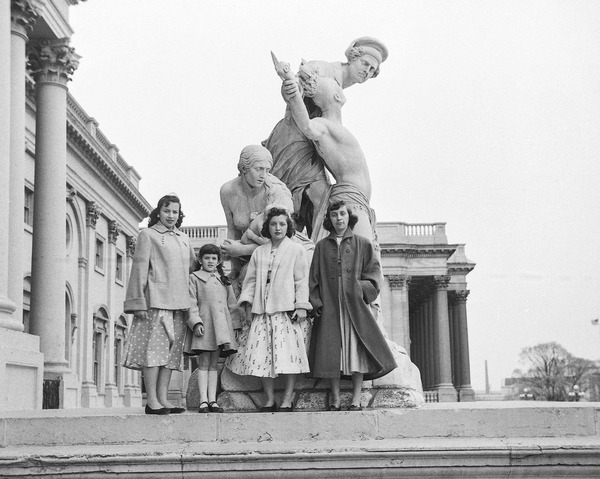
For more than 100 years, two statues flanked the entrance to the United States Capitol.
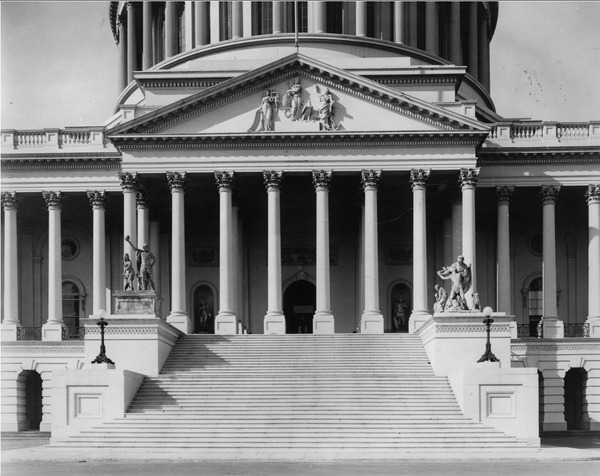
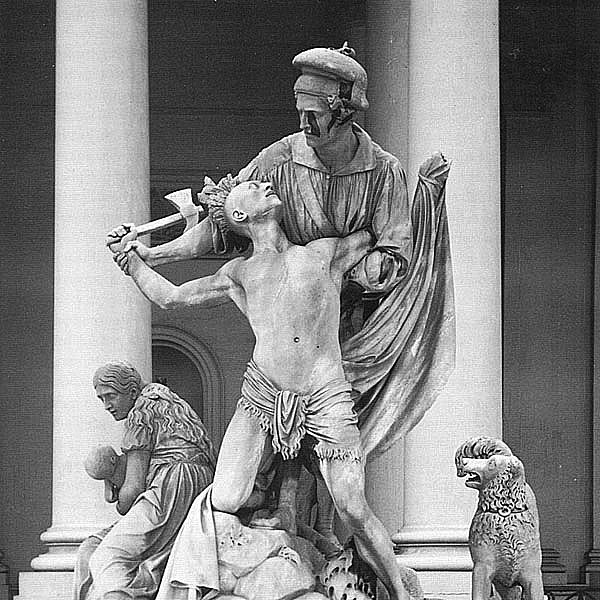
One was “The Rescue,” in which a pioneer overpowers an Indian who is about to kill the pioneer’s wife and child.
The other was “The Discovery of America,” in which Columbus strides forth onto the new world, in armor, with a globe in his hand.
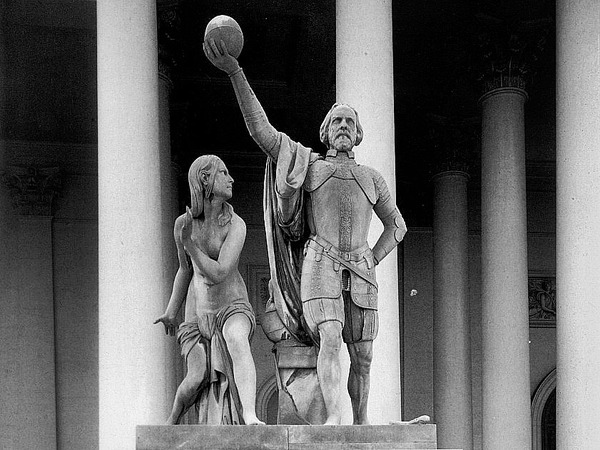
Beside him, a cowering Indian woman looks up in awe and admiration.
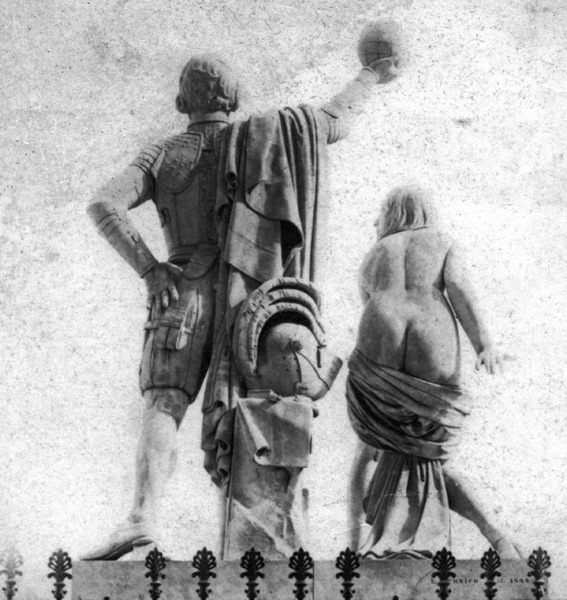
The statues were removed as part of a renovation of the Capitol façade. There was no public campaign to keep them in storage, but a committee decided they weren’t quite in step with the times.
We no longer put statues on high columns — the last one went up more than 100 years ago — but we still put up statues. Here are the most recent sixteen.
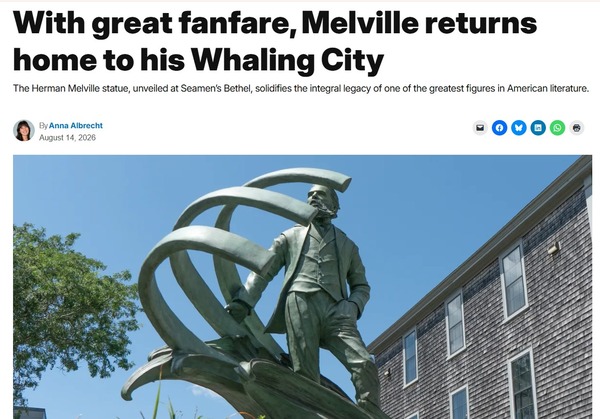
New Bedford, Massachusetts unveiled Herman Melville just this month.
Pierre, South Dakota puts up a statue to every governor, and Kristi Noem got hers this month, too, horse and all.

To celebrate America’s 250th, Donald Trump had a 30-year-old statue of Thomas Jefferson installed in the White House rose garden.
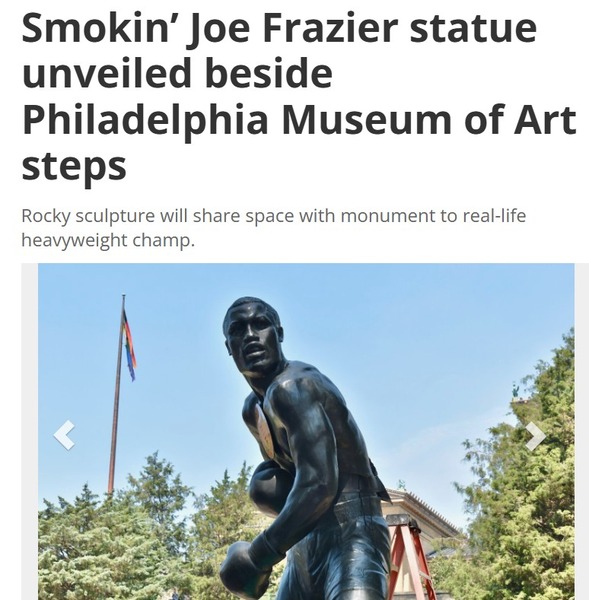
Joe Frazier went up beside the Philadelphia Museum of Art steps, where a statue of Rocky Balboa (Sylvester Stallone) used to be.
Indian guru Swami Vivekananda was unveiled in Seattle, to emphasize the growing ties between the United States and India.

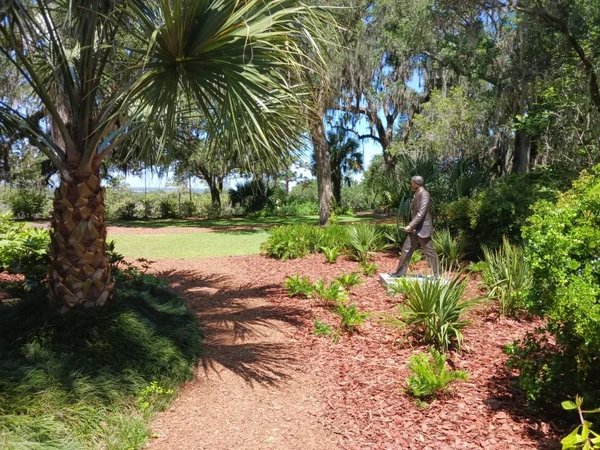
A Calvin Coolidge statue was unveiled in Bok Tower Gardens in Florida as part of the 250th celebrations.
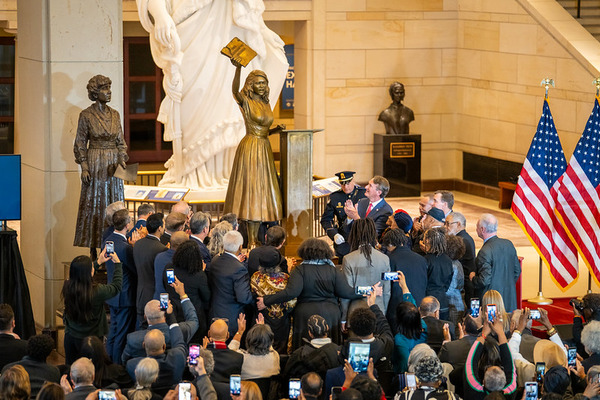
Last year, a black nobody by the name of Barbara Johns took Robert E. Lee’s place in the Capitol Rotunda.
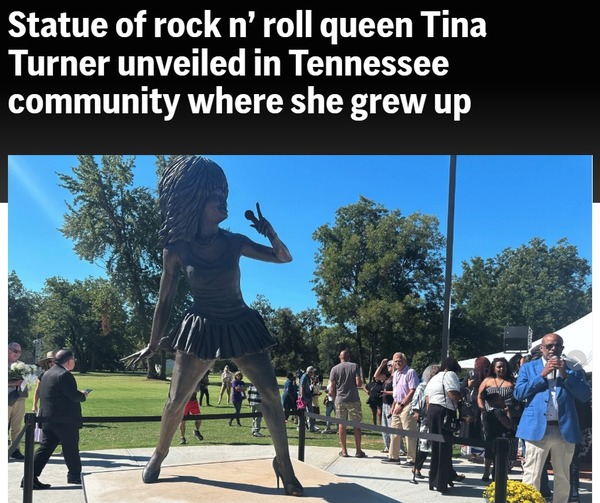
Tina Turner got her own statue in Nutbush, Tennessee, where she grew up.
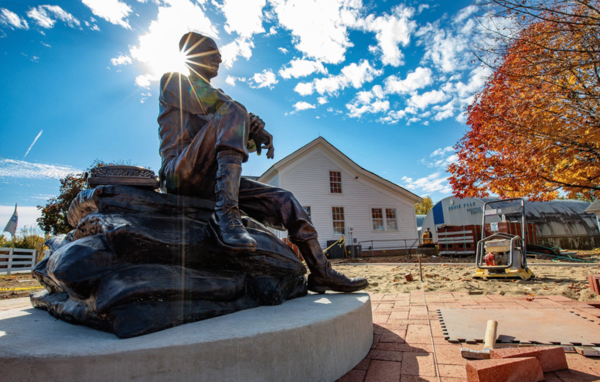
Also last year, Ernie Pyle, war correspondent in the Second World War, got a statue outside the Ernie Pyle Museum in his hometown of Dana, Indiana.
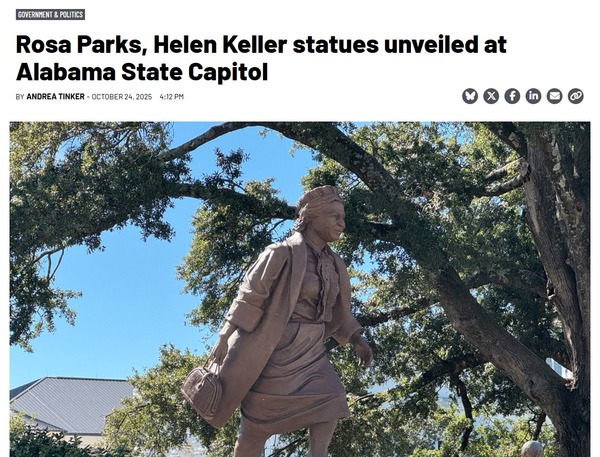
Rosa Parks and Helen Keller were unveiled on the grounds of the Alabama State Capitol.
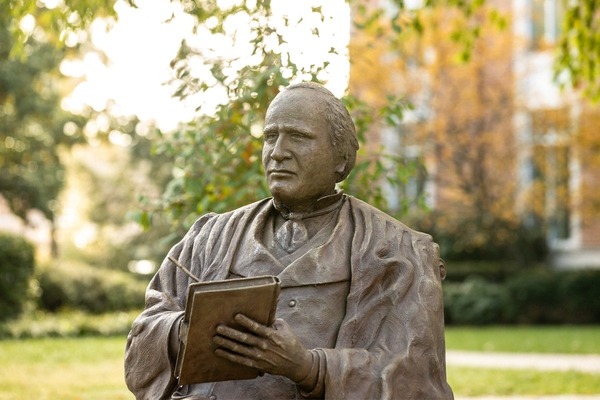
Supreme Court Justice John Marshall Harlan now sits on the Centre College, Kentucky campus. Known as “the great dissenter,” he is honored for one thing: his dissents in rulings that supported segregation.
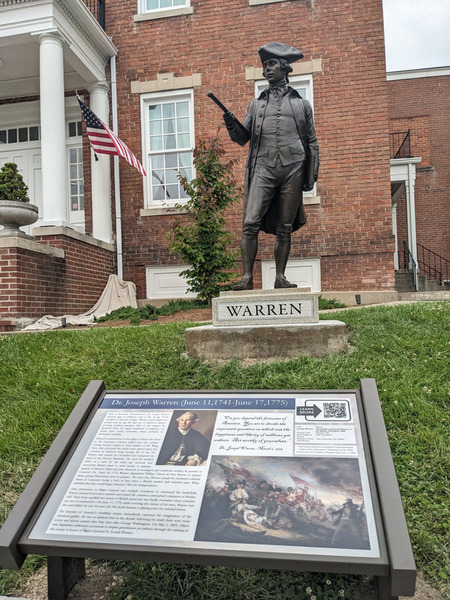
Here is Major General Joseph Warren, a revolutionary commander, 250 years after his death at the Battle of Bunker Hill.
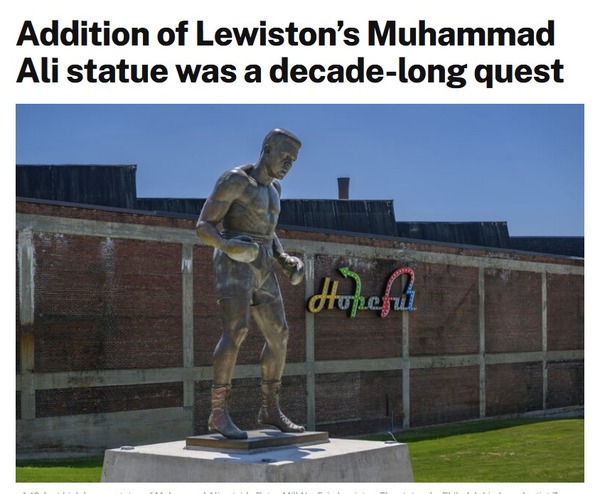
Boxer Muhammad Ali was unveiled in Lewiston, Maine, where he fought Sonny Liston in 1965.
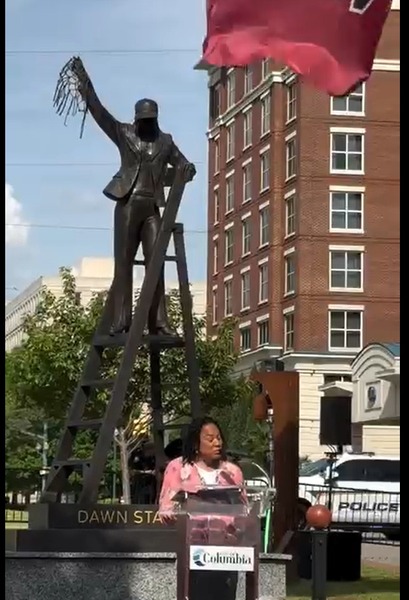
A statue of black women’s’ basketball coach Dawn Staley was unveiled in Columbia, South Carolina.
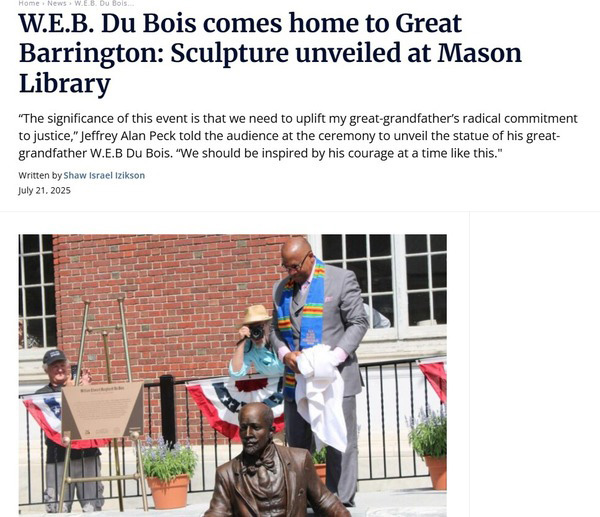
There was much celebration when a statue of black activist W. E. B. Du Bois was unveiled in Great Barrington, Massachusetts, where he was born.
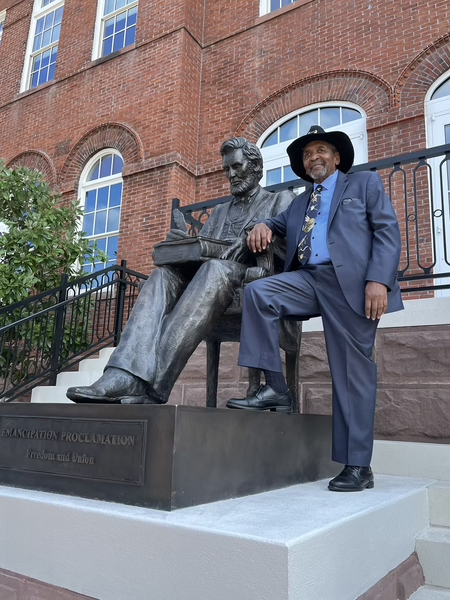
Also in 2025, a statue of Abraham Lincoln signing the Emancipation Proclamation was unveiled at the African American Civil War Museum in Washington, DC, right across the street from a statue of black Union troops.
Only seven out of the 16 were black, and only two of the eight whites — Lincoln and Justice Harlan — were honored for what they did for blacks. So only 9 of 16 were celebrating blacks, and there was only one Indian. Look for more Asians in the future. Maybe if it hadn’t been the 250th birthday of the country, there would have been a more equitable celebration of non-whites.
Not one of these statues is an impressive artwork, unlike the serious tributes we used to pay to the men we considered heroes.
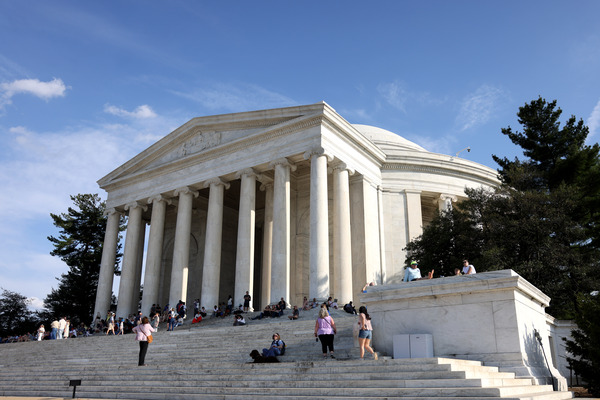
Credit Image: © Gage Skidmore/ZUMA Press Wire
We have an ever more cut-rate way to honor people, the Presidential Medal of Freedom. It is supposed to go to people who have made “meritorious contributions” in three areas: (1) The security or national interests of the United States, (2) World peace, or (3) Cultural or other significant public or private endeavors. The third, catch-all category now accounts for the huge majority of awards, and the president can hand these out however he pleases. Barack Obama splashed them out like candy: 118 in all. He was heavy on blacks, such as John Lewis, Maya Angelou, Joseph Lowery, Sidney Poitier, Desmond Tutu, Toni Morrison, Bayard Rustin, Oprah Winfrey, Stevie Wonder, Shirley Chisholm, Katherine Johnson, Willie Mays, Cicely Tyson, Diana Ross, Kareem Abdul-Jabbar, and Michael Jordan.
But he branched out and included Angela Merkel, Gloria Steinem, Ellen DeGeneres, Harvey Milk, Bill Clinton, and his own vice president, Joe Biden. I’m not sure there’s anyone in the whole lot with a distinguished and inspiring character.
Joe Biden was just as generous during his single term. He was big on athletes and entertainers and “civil rights” heroes, but he also gave the medal to Jane Goodall, Hillary Clinton, and George Soros. Yes, that George Soros.
You’d think Donald Trump would give the medal to all his pals and big donors, but he’s been tight-fisted. Only 24 in his first term, and five so far this term. Miriam Adelson, who pushed more than $100 million his way, is a champion of freedom, but that’s about it for donors. Mr. Trump is big on athletes — especially golfers — but he better find some blacks. He has honored only one: Tiger Woods.
It takes talent and determination to be a top athlete or entertainer, but we’ve come a long way from character, which is what Charles Francis Adams cared about. Are Ellen DeGeneres, Oprah Winfrey, and Harvey Milk the ones “all men” should look to so that they “may be continually apprised of the duty you expect from them”? Duty? What does that word mean?
Of course, if we granted awards and honors only to people of remarkable character, whom could we choose? Barack Obama dished out more than a medal a week. Every recipient is listed here. Who — if anyone — do you think deserved The Medal of Freedom? It is true that times of peace and plenty do not call out for character as desperate times do, but when a nation grants its highest honors to entertainers — that’s what athletes, actors, and pop stars are — we know what its people value most.
There’s a different way to see whom the country admires. Go to the children’s section of a bookstore and look for biographies. You’ll find Ruth Bader Ginsburg, Rosa Parks, Jackie Robinson. If you look hard, you might find George Washington or Thomas Edison, but you’re more likely to find Hillary Clinton and Cesar Chavez and Oprah Winfrey. If you look on the internet, do you know how many children’s biographies of Oprah Winfrey you can find? About 40.
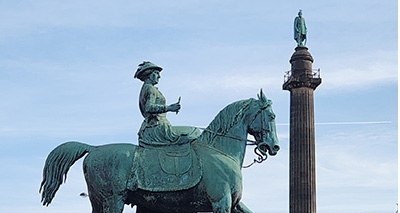
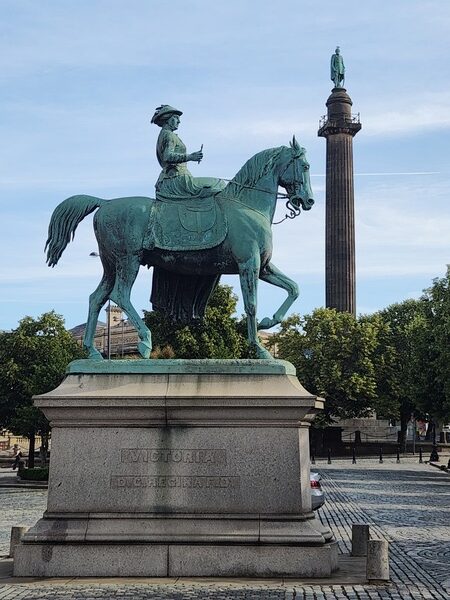
We are not alone. Earlier this year I was in Liverpool, England. The British used to put men on high columns. That is the Duke of Wellington with Queen Victoria on her horse in the foreground.
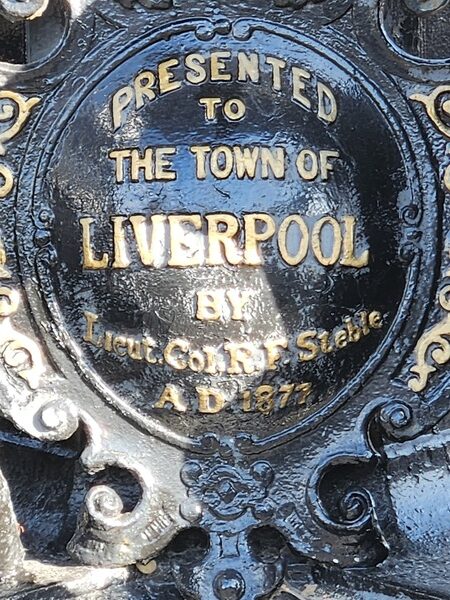
At the base of the Wellington column is a beautiful fountain, given to the city by Lieutenant Colonel Richard F. Steble 149 years ago.
At one time, it looked like this, with the column behind it.

NeilEvans, Public domain, via Wikimedia Commons
I don’t know when the water stopped flowing, but there’s only rainwater in it now.
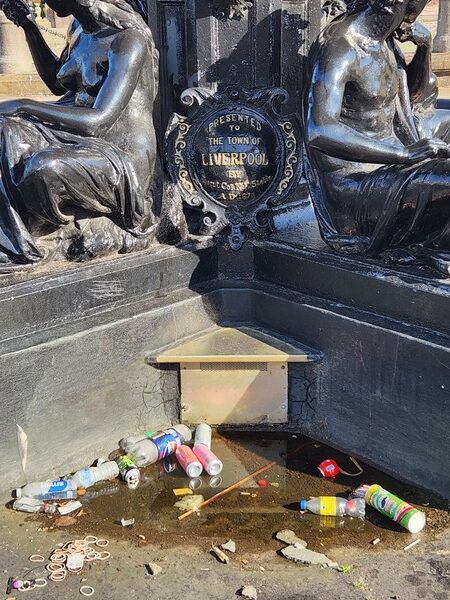
I wonder for how long Liverpool will let it look like this?
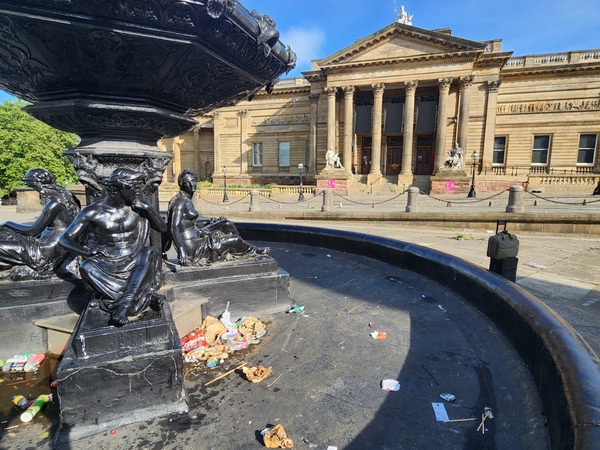
Even if the city turns the water back on, will Liverpudlians learn to stop using it as a trash bin?
If anything, Britain is more degenerate than the United States. Early this year, the Royal Navy was unable to man a single functioning frigate — or any other warship — to send to the Persian Gulf. Would Wellington care more about that or the pile of rubbish at his feet?
Do we no longer have great men, or do we have great men but fail to honor them? Is there any Western nation that produces great men, whom we can admire, on whom we would do well to model ourselves?
The Roman poet Horace wrote this in Odes, Book III, Ode 6. “Our sires’ age was worse than our grandsires’. We their sons are more worthless than they: so in our turn we shall give the world a progeny yet more corrupt.” That was in 23 BC. The Roman Empire lasted another 500 years. How long will we hold out before barbarians take over completely?