Home

Site information

Subscribe

Store

Donate

Back Issues

News Archives
by Date

News Archives
by Category

Contact Us

Send Us a
News Story

Write for AR

Interviews with
Jared Taylor

AR in the News

AR Attic

Activists

Links


Amren store on Amazon.com
Buy through this link and help AR


Atom news feed
RSS 1.0 news feed
RSS 2.0 news feed
American Renaissance

Previous Story       Next Story       View Comments       Post a Comment       Send This Page

Race and Physical Differences

AR Articles on Racial Differences
Race and Psychopathic Personality (Jul. 2002)
Race and Teenage Pregnancy (Feb. 2002)
The Biological Reality of Race (Oct. 1999)
Why Race Matters (Oct. 1997)
Race and Health (May 1996)
A New Theory of Racial Differences (Dec. 1994)
Search AmRen.com for Racial Differences
More news stories on Racial Differences
William Robertson Boggs, American Renaissance, December 1992
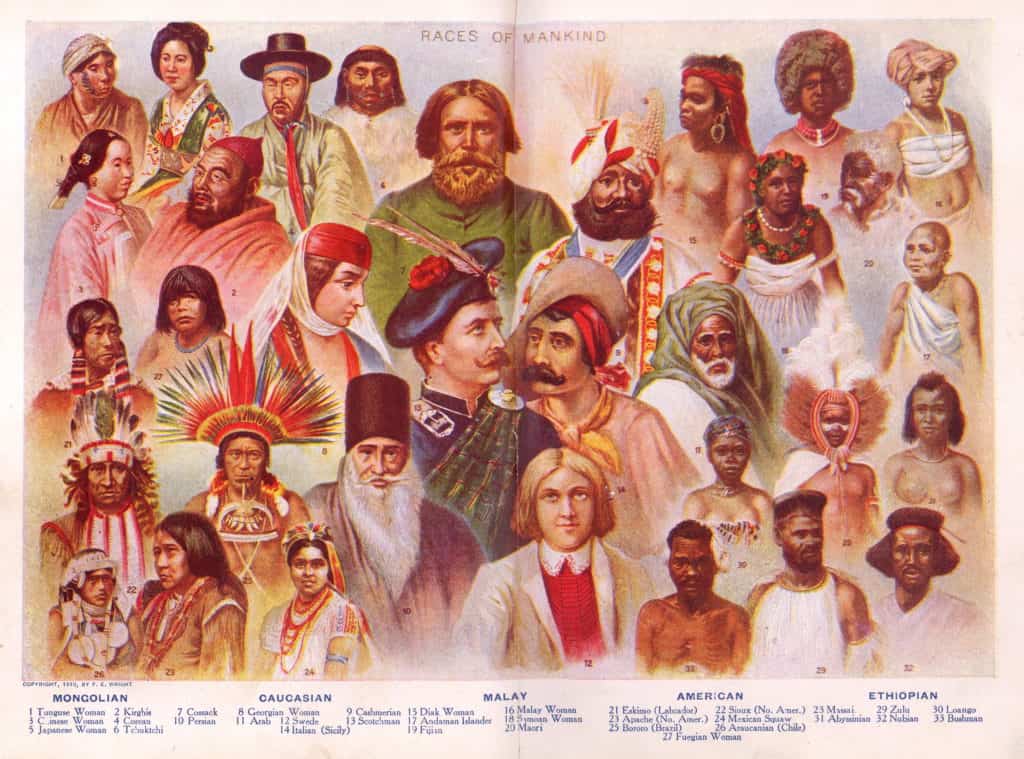
Everyone recognizes race. Africans, Europeans, and Asians can be distinguished at a glance because the races differ so obviously from each other. Although the differences are popularly referred to as “skin color,” as if this were where they began and ended, color is one of the least important ways in which the races differ.

Although many physiological differences are well established and easy to measure, they are often completely unknown to the general public. Perhaps this is because the cumulative effect of a list of physical differences can give an impression of alienness even more powerful than do assertions about mental differences.

Just as it was once universally accepted that races differ in intelligence, so the study of physical differences was once entirely respectable. Some 19th century investigators, however, hoped to find justifications for slavery and not all were good scientists. Therefore, in the revolt against “racism,” good data from the past has been thrown out along with the bad, and the study of physical differences has languished.

The modern data now becoming available confirm many 19th century views. The best evidence suggests that races differ markedly in such things as maturation rate, brain size, bone density, susceptibility to disease, and perhaps even personality.

The races differ in skin color because of different levels of melanin production. All races have approximately the same number of melanocytes, or melanin-making cells, but they differ in how actively the cells make melanin.

Anyone who has seen an albino African knows how trivial a racial difference skin color really is. The albino may actually seem more strange to a European than a normal African, because negroid features and tightly curled hair seem incongruous in a light-skinned person. No one would mistake the albino for a European. Likewise, West Africans, Dravidian Indians, and Australian aborigines are all “black,” but they are racially very different.

Color does have one physiological effect: three and a half times as much ultraviolet light from the sun passes through the skin of whites as through that of blacks. Light skin is beneficial in the northern regions where whites evolved, since ultraviolet light converts ergosterol in the body into vitamin D. Dark skin protects against the tropical sun.

Adaptation to Climate

There are other racial characteristics that are obviously adaptations to the climates in which the races evolved. Many East African peoples have elongated limbs and bodies that easily dissipate heat. North Asians, on the other hand, have evolved in a cold climate. Their bodies are more squat, they have thick, dark hair, and the epicanthic fold that gives Asians almond-shaped eyes is thought to reduce glare from snow and ice. A flat nose is less exposed to cold, and the virtual absence of facial hair means that condensation from a man’s breath will not freeze on his beard and chill his face. All of these characteristics are most obvious in the Asians who live in the coldest climates.

Some racial differences are not so easily explained. Phenylthiocarbamide (PTC) is a chemical that can be synthesized in the laboratory. To some people, it has a strong, bitter flavor, but to others it has no flavor at all. Seventy percent of Australian aborigines can taste PTC, but only 13 percent of Navaho Indians can. Fifty percent of whites and about 38 percent of Japanese can taste it.

For whatever reasons, the races do not smell the same. Blacks and whites have strong, but differing smells, and many Asians have scarcely any smell. Koreans often have no odor-producing glands in their arm-pits at all and Japanese have very few. Nineteenth-century Japanese found Europeans so foul-smelling that even today, a common Japanese expression for anything Western means “stinking of butter.”

Though they may not always be willing to say so, sports physicians have found physical differences that give different races advantages in different sports (see “May the Best Man Win,” AR, Oct. 1992). Whites and West Africans, for example, differ in proportions of body fat, width of hips, thickness of thighs, bone density, and proportion of fast- and slow-twitch muscle. Even East and West Africans differ in important ways that explain why they excel in different sports.

Because blacks have such dense bones, they are less buoyant and less likely to be swimming champions. However, their bones are more resistant to aging. After their mid-30s, white men lose about 2.5 percent of their bone mass every year. Blacks lose less than one percent. Loss of bone mass speeds up greatly under conditions of weightlessness, so blacks could probably survive longer space voyages than whites.

Studies have repeatedly found that black men have more of the male hormone testosterone in their blood than whites do. Testosterone is directly related to physical and sexual aggressiveness, but it also combines significantly with intelligence. Men who are intelligent but who have high testosterone levels are likely to be more successful, socially and professionally, than intelligent men with low testosterone levels. Men who are unintelligent but who have high testosterone are more likely to be criminals than unintelligent men with low testosterone. High crime rates among blacks are consistent with low intelligence and high testosterone.

Although egalitarian partisans—most notably Steven Jay Gould in his 1981 book, The Mismeasure of Man—have tried to discredit the evidence, it is well established that average brain size differs from race to race. A study by K. L. Beals, published in Current Anthropology in 1984, reported that a survey of 20,000 skulls shows that the average size of the brain case in Asia is 1380 cc, while in Europe it is 1362 cc and in Africa 1276 cc. Other studies have found that the brains of American blacks are approximately eight percent lighter than those of American whites.

Studies of brain size and weight can be difficult to replicate because researchers do not often have access to enough skulls or cadavers and may use different measuring techniques. A 1989 study overcame these difficulties by using magnetic resonance scanning to determine skull capacity. Brain size was found to have a positive correlation of about 0.3 with intelligence.

Not surprisingly, the bones within which brains reside can be markedly different. A child could distinguish between the skulls of Eskimos and Laplanders as easily as he could tell cucumbers from zucchinis. The skulls of Australian aborigines have characteristics not found in any other race, but common in fossils of pithecanthropus. The bones of the skull are twice as thick as those of any other race (10 mm v. 5 mm), and the skull has heavy frontal and parietal ridge lines typical of pithecanthropus. The teeth and lower jaws of aborigines are also larger than those of other races, and more similar to those of our remote ancestors.

It is little known that Africans have identical twins twice as frequently as Europeans—who in turn have them twice as frequently as Asians. Some African populations have identical twins seven times as frequently as whites. Blacks also have shorter gestation periods than whites or Asians. By the 39th week, 51 percent of black babies have been born but only 33 percent of whites. By the 40th week, the figures are 70 percent and 55 percent. Shorter gestation seems to be a characteristic of blacks that is independent of social status or access to medicine.

Prof. J. Philippe Rushton of the University of Western Ontario, who has probably studied maturation rates more extensively than anyone else, reports that rapid development of blacks continues after birth. Many African and black American newborns can hold their heads up whereas white and Asian newborns almost never can. The average age at which black children walk is 11 months, compared to 12 months for whites and 13 months for Asians.

Prof. Rushton has found that blacks reach sexual maturity earlier than whites. By age 12, 19 percent of black girls have full development of breasts and pubic hair, whereas only two percent of white girls do. Black American women menstruate at an earlier age than white women. They then go on to have sexual intercourse for the first time at an average age that is two years younger than that of whites.

Although it has long been the subject of ribald speculation, the races do appear to differ in the size of their sex organs. The best data seems to have been gathered in 1979 by P. H. Gebhard and A. B. Johnson. They actually took measurements and found that popular myths are correct: blacks are better endowed than whites. In extensive interviews, they also found that black men at least report themselves to be less restrained than whites in their willingness to commit adultery, likelihood of frequenting prostitutes, and number of sexual partners.

Somewhat comparable differences have been found between whites and Asians. Even after controlling for body size, Danes have testes that are proportionately twice the size of those of Chinese. Whites are also estimated to produce twice the number of spermatozoa per day as Asians.

Earlier maturation and early sexual activity among blacks may have a biological price. In the United States, blacks, on average, can expect to die six years sooner than whites. Higher homicide, accident, and disease rates contribute to this difference, but it is entirely possible that blacks may also have a naturally shorter life span.

Medical Differences

Our society generally keeps quiet about physical differences between the races, but information about them occasionally surfaces in news stories about disease. Alcoholism, for example, appears to strike different races at different rates. Asians (and American Indians to whom they are related) react more strongly than whites to alcohol. More Asians than whites show an allergic reaction to alcohol and therefore do not drink, whereas many American Indians seem to have a biological predisposition to alcoholism. Curiously, Asians are twice as likely as whites to suffer from motion sickness.

In the United States, the most frequently reported medical differences concern blacks and whites. It is well known that only blacks suffer from sickle-cell anemia, for example, a condition that helps the body resist malaria, and is therefore a benefit in the African jungle.

Most of the known medical differences, however, seem to disadvantage blacks. Black women are twice as likely to have strokes as white or Hispanic women, and they suffer more damaging aftereffects. Blacks are three to four times more likely to have dangerously underweight babies. This could be due to bad diet, poor general health, or scant medical care, but some studies indicate that even when these factors are equalized, black babies are more likely to be underweight.

Kidney disease is eighteen times more common among blacks than whites. Left untreated, AIDS kills blacks more rapidly than it does whites or Hispanics, and blacks do not respond as well to the drug AZT as do patients of other races. Glaucoma strikes blacks five times more often than it does whites. It sets in earlier, and the likelihood of getting the disease does not appear to be affected by social status or availability of medical care.

Blacks are also twice as likely as whites to have high blood pressure, and five to seven times more likely to have dangerously high blood pressure. This is often attributed to the pressures of “racism,” but physiology is certainly part of the cause.

A study at the University of Maryland found that when black and white students were paired for age, diet, fitness, and medical history, and given a mild stress—their hands were put in ice for 30 seconds—blacks reacted by constricting their blood vessels (a hypertensive reaction) for at least ten times longer than whites. Research in Barbados has shown that mixed-race blacks are more likely to have high blood pressure if their maternal rather than paternal ancestors were African; genes passed down from the mother seem somehow to be involved. One reason for high blood pressure among blacks may be their relative inability to secrete sodium, so a salty diet can be more dangerous for blacks than for whites.

It has long been known that blood transfusions and organ transplants work best between people of the same race. Until the Second World War, stocks of blood were routinely segregated by race for this reason. Classification by race was ended when it was discovered to be “racist,” but blood banks are reinstituting segregation.

The distribution of the common blood types is different from race to race, and some rare types are unique to certain races. Only blacks have U negative blood; only whites have Vel negative or Lan negative blood. Dr. W. Laurence Marsh of the New York Blood Center justifies racial classification: “It makes no sense to screen 100,000 whites for U negative when no U negative white person has ever been found.”

Kidneys and other organs are classified by race for similar reasons. About 20 percent of blacks are so genetically incompatible with whites that they reject organs from all white donors.

Origin of Species

Clearly, all these differences cannot be dismissed with the fashionable notion that race is nothing more than a matter of skin color. No one knows for how long the different races have been evolving independently, but it might be necessary to go back one million years or more to find an ancestor common to all races. Clearly, a great deal of divergence has taken place during that time.

In his magisterial work, Race, John Baker suggests that certain racial groups are already so different from each other that they are not, technically speaking, the same species. Certain matings between extremely unrelated stocks—Bushmen and Europeans, for example—are thought to have produced only female children, or in some cases hybrids that could not mate successfully among themselves. These are well-known signs of an unrelatedness that is so vast as to be verging on separation into different species.

Indeed, according to Dr. Baker, in the prehistoric past different races and sub-races probably avoided cross-breeding and behaved as if they were different species. He points out that in nature, animals that are no more different from each other than northern Europeans and southern Europeans never breed with each other. It is only in domestication that a horse, for example, can be made to mate with a donkey. Man is, of course, the most domesticated of animals. As the French anthropologist Paul Broca remarked, “Man, especially civilized man, is of all the animals the least exclusive in his amours.”

Separate development is, to use Charles Darwin’s phrase, the origin of species. Apes and humans once had a common ancestor but are now distinct species. Likewise, racial differences are nature’s first steps towards the creation of new species. Left to themselves for long enough, the different races of man would have become so different that they could no longer produce fertile young. This might well have happened if the domesticating effects of civilization had come later, or if discovery and travel had not brought isolated peoples into contact with each other.

One of the great ironies of today’s quest for “diversity,”—the forcible mixing of peoples as unlike each other as possible—is that it is a destroyer of diversity. It is only through separation that nature can produce that culmination of true diversity: a new species.

Original article

(Posted on February 29, 2008)

     Previous story       Next Story       Post a Comment     Send This Page      Search

Comments

It is only through separation that nature can produce that culmination of true diversity: a new species.

These articles are always worth a laugh or two. It took Homo Erectus 1 million years to evolve into Homo Sapiens. And that was due to extreme environments and radical changes in the environment. What makes anyone think that a new species will evolve in our lifetimes especially considering that Humans today live under such relative comfort and are not exposed to any extereme elements ?

Posted by Da Vinci at 9:19 AM on March 1


After you’re finished laughing, da vinci, why don’t you go ahead and counter some of the claims made in the article. The main point of the article is that there is a lot more to race than skin color. Do you disagree? If so, why?

On another note, I’d be interested in seeing some corroboration for the claims, made by the author, that white/bushman hybrids are always born female. There’s a lot here worthy of further study - which probably won’t happen because the topic is considered taboo.

Posted by jewamongyou at 12:17 PM on March 1


“These articles are always worth a laugh or two. It took Homo Erectus 1 million years to evolve into Homo Sapiens.”

In fact, the change from Homo erectus/ergaster to various transitional stages took more than 1 million years. Homo erectus/ergaster appears in Africa 2 million years ago and shortly after expanded to East Asia. Then a long phase of stagnation followed, eventually ending ca. 1 million years ago, very probably due to the advance of true Ice Ages.

At least 800 000 years ago, one of such stages (Homo antecessor) came to Europe and relatively quickly evolved into Homo heidelbergensis (600 000 years BP) due to the first harsh Ice Age in Europe. Subsequently Heidelbergensis evolved into an extremely cold-adapted Homo neanderthalensis (250 000 years BP.)

So, the evolutionary change can be relatively quick, if conditions are changed. However, Homo erectus/ergaster hasn’t been exposed to extreme climatic changes for a long time.

Posted by at 2:09 PM on March 1


“On another note, I’d be interested in seeing some corroboration for the claims, made by the author, that white/bushman hybrids are always born female. “

I spent a half-hour looking for corraboration and found none.

Posted by at 3:20 PM on March 1


So that accounts for affirmative action. That’s why Whites are passed over for jobs and promotions. That’s why Whites pay full tuition in college and non-Whites get free tuition (scholarships and financial help that they don’t have to repay)

Posted by at 4:15 PM on March 1


“It took Homo Erectus 1 million years to evolve into Homo Sapiens… What makes anyone think that a new species will evolve in our lifetimes”

How long have whites and blacks been separate from each other? Perhaps it’s been nearly a million years… if it’s only been a short time… I’d have to say, wow a lot of changes can sure take place in an short time! New pathogens are springing up everyday, and those are only the dangerous ones that we hear about.

Posted by at 6:14 PM on March 1


Anonymous at 6:14 it’s highly unlikely that the races have been separated that long - as indicated by genetic research. Don’t underestimate the adaptability of Humans; it doesn’t take more than a few thousand years for Humans to adapt to their environment. I.Q. differences between populations, for example, can develop within a few generations. For example there are noticeable differences even amongst the various European populations and they haven’t been separated that long.

Posted by jewamongyou at 10:52 PM on March 1


I have a Norwegian background, not Asian, but can’t tolerate alcohol and have a problem with motion sickness. I once read a theory about this that seemed more plausible. Alcohol was developed in the Mediterranean and gradually fanned out. Those closest to the area, over a longer period of time developed the most tolerance. The cultures farther away, more recently exposed to alcohol, haven’t developed as much tolerance.

Posted by at 2:18 AM on March 2


6:14PM,

Concerning human evolution you ask the wrong question:”how long have whites and blacks been separate from each other?”. The question is wrong because evolutionary changes in the form of genetic mutations are not once-and-for-all gross morphological transformations that neatly separate organisms from each other.

Such transformations when they occur are gradual and minimally noticeble. The ways in which organisms evolve derive from what most biologists describe as: 1)natural selection according to the dictates of the environment, 2)genetic drift, 3) assorted mating, 4)founder effects, 5)bootlenecks, etc.

In the case of those prehitoric migrants who slowly trekked out of that vast landmass[note humans as an extant species had some 70% of their 170,000 year existence in Africa before drifting into areas like the Levant and Arabia before moving on to places like South Asia and central Eurasia]now known as Africa modern biology through haplotype analysis has shown that the migrants from Africa into Eurasia then into Europe became phenotypically distinguishable—in a general way—from each other only some 20,000 to 40,000 years ago. Evidence shows that Y and MtDNA haplogroup differences between Africans and Europeans are not sharply discrete. In fact the African haplogroup E3b is found in varying degrees in Europe. The incidence of E3b is approx. 23% in Greece while in Western Europe it falls to less than 10%.

SOME TRIVIA NOTES

The main European haplogroups are R and I—with some E3—reflective of different migration times into what is now known as Europe.

Europeans, Tamans(extinct) and Australian aboriginese all spring from the same small migratory groups that lfet Africa some 50,000 years ago.

In Africa, large sections of the Cameroon population show the assumedly European haplogroup R1—despite being pohenotypically indistinguishable from those are not R1.

The genes that produce the distinctive minimally pigmented European epidermis are no more than 10,000 years old.

Posted by OCCAM at 3:42 AM on March 2


After you’re finished laughing, da vinci, why don’t you go ahead and counter some of the claims made in the article. The main point of the article is that there is a lot more to race than skin color. Do you disagree? If so, why?

I agree that race differences are not only skin deep they are physiological. However, there is no definitive proof that Whites are far more intelligent than blacks. In fact scientific experiments conducted under controlled conditions negate that. An example is the IQ tests conducted on the children of American soldiers in Germany which found no difference between white and black kids or the one which found that black kids adopted by white families had an IQ at par with white kids. Which means environment and culture is the key determinant in how well a child does academically.

IMO Blacks perform poorly in school mainly due to cultural reasons. Africa never developed because the Africans were not as motivated or as capitalistic as the Europeans. Accumulating wealth was never a priority. It was a function of the environment. Today cultural reasons still hold back blacks. The black teens watch twice as much TV as whites and 4 times as much as Asians. In many black communities, the kids are still hostile to education. These are cultural reasons which if addressed will see a rise in the performance of black kids in education..

Posted by Da Vinci at 10:32 AM on March 2


Da Vinci wrote:

An example is the IQ tests conducted on the children of American soldiers in Germany which found no difference between white and black kids or the one which found that black kids adopted by white families had an IQ at par with white kids.

There is a very good reason for that. American “soldiers” in Germany means the U.S. Army, and the kinds of whites and blacks that gravitate toward that branch of the service are relatively close to each other in intelligence anyway. So serving in the Army can leave one with false impressions about equality. Of course the white and black army brats are relatively equal.

Posted by St. Louis CofCC Blogmeister at 11:05 AM on March 2


Lt. Louis, while that is true, there is still the little issue of “regression to the mean”. Those kids should still show a slightly lesser I.Q. than their parents because of it. I haven’t looked deeply into that study to discuss it meaningfully but this I can say: it is one study out of hundreds. When we have hundreds of other studies leading to the opposite conclusion, clearly those other studies have more weight. The biggest study of all is what we call “reality”. The reality is that not all blacks share the same culture. In fact hundreds of cultures are represented among blacks so blaming low I.Q. on culture (as da vinci does) doesn’t make any sense. His only way out of this would be to claim that all black cultures share similar attitudes toward education. In that case, the obvious question is “why?”. The simplest explanation would be that black culture is heavily influenced by black race; after all, race is the only thing all blacks have in common.

Da Vinci, on a positive note, more and more influential people are taking note of blacks cultural flaws and starting to address them. If, as you say, the only I.Q. hurdle blacks face is their culture, then we should start seeing a major reduction in the I.Q. gap within a generation. My prediction? There will be no such closing of the gap. Instead, we will be treated to yet more excuses.

Posted by jewamongyou at 12:31 PM on March 2


Da Vinci wrote:

An example is the IQ tests conducted on the children of American soldiers in Germany which found no difference between white and black kids or the one which found that black kids adopted by white families had an IQ at par with white kids.

There is a very good reason for that. American “soldiers” in Germany means the U.S. Army, and the kinds of whites and blacks that gravitate toward that branch of the service are relatively close to each other in intelligence anyway. So serving in the Army can leave one with false impressions about equality. Of course the white and black army brats are relatively equal.

….and let’s not forget the data provided by Rushton in Race, Evolution and Behaviour which showed a widening intelligence gap as the black and white children aged. Blacks and whites may have scored similarly at the age of 7, but retesting at the age of early adulthood would result in the 15 point IQ difference.

Posted by AK at 1:13 PM on March 2


“An example is the IQ tests conducted on the children of American soldiers in Germany which found no difference between white and black kids or the one which found that black kids adopted by white families had an IQ at par with white kids.”

How could this possibly matter if, as you always maintain, IQ is some kind of political fiction and has nothing whatever to do with intelligence? In any case this one study, which egalitarians always pull out of their hats as though no one here had ever heard of it, proves nothing by comparison to 100 years’ worth of IQ data which have demonstrated a slightly more than one STD in average IQ between whites and blacks.


“Africa never developed because the Africans were not as motivated or as capitalistic as the Europeans. Accumulating wealth was never a priority. It was a function of the environment.”

How does this explain the utter failure of blacks in non-black societies relative to non-blacks? Your consistent harping on “capitalism” is absurd; what “wealth,” apart from totems and the sorts of shiny objects coveted by blacks, has ever arisen in the stone-age societies blacks build? Capitalism cannot arise among low-IQ populations; it presupposes a level of intelligence and creativity lacking in blacks. Blaming “culture” is putting the cart before the horse. It is clearly not the nature of blacks to create the same kinds of societies that whites or Asians create. What possible reason is there to dispute this?

“These are cultural reasons which if addressed will see a rise in the performance of black kids in education..”

If only someone else had thought of this! In fact it is hard to imagine a thesis which has been more thoroughly tested and disproven as this one. Why haven’t six decades of social engineering, attended by immeasurable confiscated public largesse (confiscated from whites, that is) brought about intellectual parity? Why are black adoptees of white parents perform academically at a level barely above that achieved by black children raised by black parents? See the Scarr-Weinberg study.

Posted by Cassiodorus at 3:08 PM on March 2


“IMO Blacks perform poorly in school mainly due to cultural reasons. Africa never developed because the Africans were not as motivated or as capitalistic as the Europeans. Accumulating wealth was never a priority.”

If this were true and the difference is cultural, surely one would be able to point to a succesful black culture that has anywhere near the achievments of the other races.

As far as blacks not being materialistic, this is obviously nonsense. One only needs to observe blacks in American society to quickly conclude that they are far more interested in material things than in learning. What is it called, “bling”?

Tests of black twins raised by two families, one white and one black, show the two scoring about equally on IQ tests, but as they age, they diverge. This is research by Rushton, I think.

The key thing here is the world wide accomplishments of the two groups. In three pages of noteworthy inventions in the world almanac, about 98% of the inventors are Europeans. Blacks? Not sure if there are any. It’s clearly more than culture.

Posted by William Hendershot at 5:41 PM on March 2


A few questions on this…

Quotes mine…”In the case of those prehitoric migrants who slowly trekked out of that vast landmass[note humans as an extant species had some 70% of their 170,000 year existence in Africa before drifting into areas like the Levant and Arabia before moving on to places like South Asia and central Eurasia]now known as Africa modern biology through haplotype analysis has shown that the migrants from Africa into Eurasia then into Europe became phenotypically distinguishable—in a general way—from each other only some 20,000 to 40,000 years ago. Evidence shows that Y and MtDNA haplogroup differences between Africans and Europeans are not sharply discrete. In fact the African haplogroup E3b is found in varying degrees in Europe. The incidence of E3b is approx. 23% in Greece while in Western Europe it falls to less than 10%.”

From when do the percentages of the incidence of haplogroup E3b in these various populations arise?
I am assuming these come from modern samples.
How can you possibly think that current analysis can in any way reflect the various genotypical/phenotypical relations of these various peoples at any time in the past? How about 1000 years ago? Maybe 5000 years ago?
You are taking a snapshot of the present and assuming complete genetic stasis over time to clarify the past.

Next question…
Is haplogroup E3b unique to homo sapiens?

Also, these people “slowly trekked” out of Africa.

Did you see this?
Was this noted by historians of the times?
Is there any direct empirical evidence that overwhelmingly supports this conclusion? To the complete discredit of any other possible narratives?

Or, does this narrative fit what you think happened?

Are you absolutely sure that there is no other plausible explanation for your claims?

That “every stone” everywhere, has been turned over and its secrets analyzed?
And interpreted without any due prejudices on the part of those who would divine its secrets?

Posted by mderpelding at 9:18 PM on March 2


Dr. Watson said the same thing and the liberals with a lower case l, went on a crusade gainst the poor fellow.

Posted by enraged at 10:30 PM on March 2


Those tests DaVinchi mentioned don’t mention the percent of whiteness in the black testers or the original IQs of the white testers.

Posted by Mike at 2:00 AM on March 3


See news article on BBC ‘Researchers have found the behaviour of immune system genes varies from race to race - potentially affecting how they respond to infection.’
http://news.bbc.co.uk/2/hi/health/7270562.stm

Posted by Terry at 4:34 AM on March 3


“Of course the white and black army brats are relatively equal.”

What happened to the vaunted ‘regression to the mean’?

Posted by at 10:13 AM on March 3


Da Vinci,

You say that Africa never developed because Africans were not motivated to practice capitalism. You also say that wealth accumulation was not a priority. This is not quite true.

One historical anecdote disproves what you claim. Mansa(“king” in Mandinka)Musa of MALI(15th century) carried so much gold to Cairo during a pilgrimage to Macca that there was a sizable inflation effect in that city for several months. So Mansa Musa had obvioudly accumulated lots of gold wealth. Google “Mansa Musa”.

In fact, Africans are natural traders and capitalists as any visitor to any big African city with its largew open markets will testify. The capitalist principle of acquire items at particular costs then sell them to make a profit based on the market mechanism of supply and demand.

In pre-colonial/contemporary times Africans accumulated wealth through their livestocks of cattle, sheep, goarts, camels, etc. And ancient cities like Kano(Nigeria) were well known for their trading enterprise which involved much trans-Sahara trade in livestock, gold, horses, leather[in fact the famed “Moroccan leather” was actually “Hausa leather” transhipped to Europe by way of Morocco.

Timbuktoo(Mali), Gao(Mali), Ibadan(Nigeria),Kilwa(Somalia), Zimbabwe, Khartoum, Axum, etc. were all well-known trade towns that engaged in long-distance trade.

And even today there are individual Africans—some illiterate, but quite numerate—who havwe become millionaires through trade. The major problem though is that most Africans who are disposed to business don’t make much headway because of lack of access to bank capital. Explanations? Another story.

MDEPELDING,

E3b is indeed an uniquely human haplotype. The lineage history of all human groups is pretty much accepted by scientists in genetics these days. There is much information that could be found in the scientific literature. Why not just google “World Haplogroup Maps” to confirm what I say!

Humans slowly trekked out of Africa based on the dated ages of rock carvings etc. Most likely, those people had no idea where they were going—except that they were following migrating mammals for hunting.

Posted by OCCAM at 2:14 PM on March 3


There IS no difference, genetically, between Africans/Afro-Americans and Whites. It’s just a matter of differing outlooks and values. (still laughing)

It HAS to be genetic! How else would you explain the gross disparity between White humans and Blacks? The reality that Blacks have amply demonstrated they are a race of sociopathic failures. American Blacks only marginally different from their African peers. Yeah, I realize I am playing into the hands of Blacks, providing them with a physical excuse for their mentality. But compare achievements by THEIR race on a vis-a-vis basis with all other racial groups over the past 50,000 years or so. It can’t be racial discrimination keeping Blacks in that primitive barely post-Stone Age culture in Africa.

Five thousand years from how, Blacks STILL will blame racism for their non-achievement and crime-prone tendencies.

Posted by Fed Up at 2:33 PM on March 3


Da Vinci wrote : “Africa never developed because the Africans were not as motivated or as capitalistic as the Europeans. Accumulating wealth was never a priority. It was a function of the environment.”

So you are saying that since Africans evolved in a relatively stable, friendly environment they tended not to horde things (food, wood, animal skins, etc…)? Perhaps there is some truth to that, but I think that the African-American experience shows that culture tends to spring from biology…not environment. I have seen Blacks in Detroit that are as “unmotivated” as those in tropical locales.

Posted by WestSider at 5:40 PM on March 3


Some salient points regarding the mixed race German children:

http://www.gnxp.com/MT2/archives/000638.html

Jensen in The G Factor has a few quick responses:

The fathers’ IQs are not accounted for, and it could be that both groups of servicemen, black & white, were not representations of the mean in their parent populations. Jensen notes that 30% of blacks vs. 3% of whites were rejected during preinduction because they failed mental tests.

Factors that influenced assortive mating were not tracked. For instance, low SES German women might have had equal preferences for high IQ black officers and low IQ white privates because intelligence could have overcome racial bias in the former case while there was a preference for the latter because they understood that their children might be less ostracized by society if they were not racial minorities.

The tests were taken during pre-adolescent years when correlation between IQ scores and genotype is lower than in later years.

Heterosis, or hybrid vigor, could have bridged some of the gap.


For the third point, it’s been demonstrated time and again that the gap between Whites/Asians and Blacks expands as they age. From about 5 or 6 points at the age of 6 to 1.1 SD at the age of 24.

http://www.reason.com/news/show/116991.html

“Nevertheless, Flynn noted, in the US the tendency is for the black/white IQ score gap to widen with age. According to Flynn, the average IQ for black four-year olds is 95.4, which drops to 89.4 at age 14 and widens further to 83.4 by age 24.”


Posted by Stillwarm at 3:29 AM on March 4


To OCCAM who posted at 3:42 AM on March 2

In Africa, large sections of the Cameroon population show the assumedly European haplogroup R1—despite being pohenotypically indistinguishable from those are not R1.

Here’s an explanation about the R1 Haplogroup found in Camroon from Wikipedia:

“The majority of members of haplogroup R belong to the Haplogroup R1, defined by marker M173. R1 is very common throughout South Asia, Europe and western Eurasia. Its distribution is believed to be associated with the re-settlement of Eurasia following the last glacial maximum. Its main subgroups are R1a (SRY1532) and R1b (M343).

One isolated clade (or clades) of Y chromosomes that appear to belong to Haplogroup R1b1* (M173-derived) is found at high frequency among the native populations of northern Cameroon in west-central Africa, which is believed to reflect a prehistoric back-migration of an ancient proto-Eurasian population into Africa; some researchers have reported having also detected Haplogroup K2 Y-chromosomes at a low frequency among some of these Cameroonian populations, which also suggests a Eurasian affinity.[1] Some Y-chromosomes that appear to be closely related to the northern Cameroonian R1b1* are found at a substantial frequency among the modern population of Egypt. Many modern populations of northern Cameroon speak Chadic languages, which are classified as an ancient branch of the Afro-Asiatic superfamily of languages; the now extinct language of the Ancient Egyptians also belonged to the same superfamily.

Individuals whose Y-chromosomes possess all the mutations on internal nodes of the Y-DNA tree down to and including M207 (which defines Haplogroup R) but which display neither the M173 mutation that defines Haplogroup R1 nor the M124 mutation that defines Haplogroup R2 are categorized as belonging to group R*. Some instances of Haplogroup R* have been reported from samples of Australian aboriginal populations.”

http://en.wikipedia.org/wiki/Haplogroup_R_(Y-DNA)


Discussion of E3B:

http://en.wikipedia.org/wiki/E3b

Discussion of sub-Saharan DNA admixture in Europe:

http://en.wikipedia.org/wiki/Sub-Saharan_DNA_admixture_in_Europe

mtDNA

A study by Gonzalez et al. 2003[5] found L haplogroups at rates of 0.1% in Scotland, 0.4% in England, 0.7% in North Germany, 1.4% in France, 2.9% in Galicia, 2.2% in Northern Portugal, 4.3% in Central Portugal, and 8.6% in Southern Portugal (Alentejo and Algarve) (note that these figures do not count the L3 lineage, which may be of ancient introduction and so remains ambiguous). For comparison, sub-Saharan mtDNA runs 21.8% in North Africa.

According to another study by Pereira et al. 2005,[6] sub-Saharan mtDNA L haplogroups were found at rates of 0.62% in a German-Danish sample, 0.94% in Sicilians, 1% in the British/Irish, 2.38% in Albanians, 2.86% in Sardinians. This paper which provides a deeper and more global insight into the African female influence in Iberia shows that the mean frequency reaches 3.83% in Iberians. The frequency is clearly higher in Portugal (32 sequences in 549 individuals; 5.83% with a high frequency of 11% in southern Portugal) than in Spain (8 out of 496; 1.61% with a higher frequency of 3.26% in Galicia) and without parallel in the rest of Europe.

[edit] Y-DNA

Sub-Saharan African Y-chromosomes are much less common in Europe, for the reasons discussed above. However, Haplogroups E(xE3b) and Haplogroup A spread to Europe due to migrations from Northeast Africa, rather than the slave trade. The haplotypes have been detected in Portugal (3%), France (2.5% - in a very small sample), Germany (2%), Sardinia (1.6%), Austria (0.78%), Italy (0.45%), Spain (0.42%) and Greece (0.27%). By contrast, North Africans have about 5% paternal black admixture.[7]

In the UK Sub-Saharan African y chromosomal haplotypes have been found in a Yorkshire village.[8]

[edit] Neutral autosomal markers

Neutral autosomal markers are odd fragments of DNA that do not affect a person’s physical traits.

Because they are autosomal (within the Nuclear DNA that is subject to Meiosis), such markers reflect the recombination of paternal and maternal DNA with each generation. Hence, they are less useful than mtDNA or Y-DNA in tracking migrations and they are less precise as to time.

This makes it hard to tell if any particular marker dates from the 1500-1800 slave trade, or from the post-glacial re-colonization of Europe, or from some time in between. On the other hand, neutral autosomal markers are useful for individual genealogies since they reflect just how much of an individual’s genome came from which population group. Two studies by Rosenberg et al. 2002[9] and Wilson et al. 2001[10] failed to detect any sub-Saharan admixture in Scots, Russians, Basques, Frenchmen or Italians, while 1% was observed in Norwegians.

However DNAPrint Genomics, which has published its work in the scientific literature for many years (including Journal Human Genetics and Journal of Forensics Sciences[11]), mentions in its test using autosomal markers that the average South Europeans type with approximately 5% sub-Saharan genetic material (European American = 3%, Northern Euro

Posted by Stillwarm at 4:17 AM on March 4


Stillwarm,
Your comments are useful. One should be cautious though about ascribing Cameroonian R1 to some proto-Eurasian back migration into Africa. The widespread nature of R in Eurasia would tend to suggest that its expansion nub was somewhere in Africa with the parent strand migrating further into Central Africa from somewhere min East-Central Africa.

Note too that, contrary to assumptions, E3b is strictly East African—not North African—given that its oldest forms are found in places as far south as Tanzania.

And again, the majority Y haplogroup in North Africa is E3b[East African] while its majority MtDNA is Iberian European—no doubt derived from the trans-Mediterranean trade in European females. By contrast the Arab haplogroup J accounts for some 25-30% of North Africa Y DNA—the result of West Asian Arab invasions and colonisation of North Africa.

Posted by OCCAM at 1:23 PM on March 4


Home      Top      Previous story       Next Story      Send This Page      Search

Post a Comment

Commenting guidelines: We welcome comments that add information or perspective, and we encourage polite debate. Statements of fact and well-considered opinion are welcome, but we will not post comments that include obscenities or insults, whether of groups or individuals. We reserve the right to hold our critics to lower standards.


Remember Me?

(you may use HTML tags for style)