Beautiful Losers No More
Peter Bradley, American Renaissance, July 10, 2026

Credit Image: © Matias J. Ocner/Miami Herald via ZUMA Press Wire
Subscribe to future audio versions of AmRen articles here.
Scott Greer, Whitepill: The Online Right and the Making of Trump’s America, Passage Publishing, 2026, 300 pp, $34.95 hardcover.
Whitepill by Scott Greer takes readers inside the rise of an obscure online subculture that became perhaps the most dynamic force in American politics. Known by many names, including the Dissident Right, Alt-Right, and New Right, the Online Right emerged as a reaction against leftist identity politics. The blogs, webzines, and online forums where these mostly young men gathered offered one of the few places to discuss issues such as race, demographics, and cultural alienation freely. Over the next decade, this loose coalition joined forces with Donald Trump’s MAGA movement to challenge taboos upheld by both the Left and the conservative establishment. In doing so, it reshaped the American political landscape.
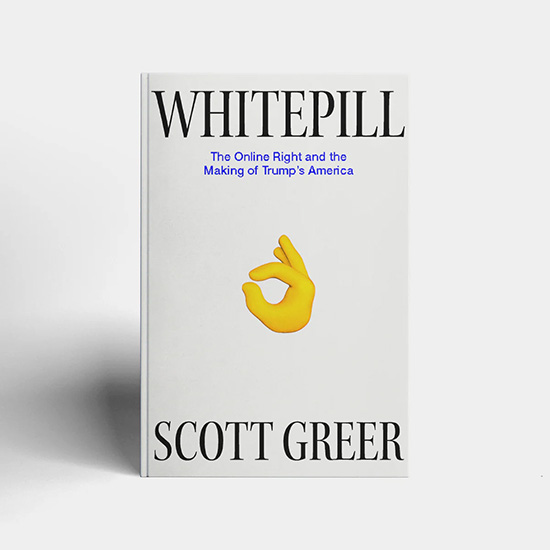
Mr. Greer opens the book by examining the conditions that gave rise to the Online Right. Barack Obama’s election in 2008 was supposed to usher in a new post-racial America, yet it had the opposite effect. He provides numerous examples of how President Obama openly practiced black identity politics, including the Michael Brown, Trayvon Martin, and Freddie Gray cases. While condemning riots, he laid the blame for these and other racial incidents at the feet of whites rather than blacks. Throughout the 2010s, academia, the media, schools, Hollywood, government, and major corporations increasingly embraced “wokeness,” or leftist identity politics. During this period, whites regularly lost jobs over innocuous jokes and often became targets of public condemnation for even mildly challenging the leftist orthodoxy that dominated college campuses.
Racial issues were not the only forces that sparked a backlash. Feminists promoted claims of a “campus rape culture” that fueled hysteria at universities. A single accusation, or even a woman’s regret over a one-night stand, could destroy a young man’s future. The courts legalized same-sex marriage after supporters failed to secure it at the ballot box. Rainbow flags appeared across the country, including above the White House. During Obama’s two terms, the number of foreign-born residents in the United States increased by more than six million. As this demographic change unfolded, growing numbers of Americans felt like unwelcome strangers in their own country. Mr. Greer writes, “Many young white men in particular came to feel alienated by a new liberalism that pathologized their ‘whiteness’ and demanded that they ‘check their privilege.'”
During the Obama years, what the author calls “Paul Ryanism” dominated Republican politics. Rather than confront the Left on race and immigration, Republican and conservative leaders focused almost exclusively on fiscal policy and punted on cultural matters. At first, they simply ignored these issues. Over time, however, they sounded nearly as anti-white as the liberals they claimed to oppose. Whitepill offers numerous examples that illustrate how awful conservatives were during this era:
- National Review fired longtime columnist John Derbyshire after he published a race-realist essay responding to the Trayvon Martin case.
- Conservative commentator Erick Erickson published a column titled “Must We Have a Dead White Kid?” in which he accepted the Left’s narrative surrounding the 2014 shooting of Michael Brown.
- After Mitt Romney lost the 2012 presidential election, Fox News host Sean Hannity argued for abandoning immigration as a political issue, declaring, “We’ve got to get rid of the immigration issue altogether. You create a pathway for those people that are here — you don’t say you’ve got to go home.”
- Senator Rand Paul branded himself a “Detroit Republican” and denounced the war on drugs as racist.
- The American Conservative praised mass immigration for supposedly making America less interventionist.
Mr. Greer describes conservatism during this time as “nothing more than tax cuts and cultural surrender.” But an alternative was brewing.
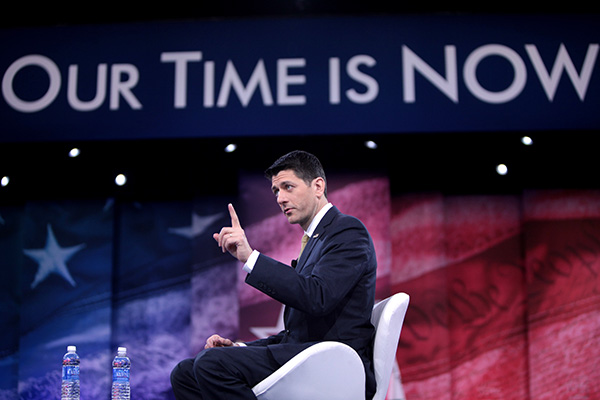
U.S Speaker of the House Rep. Paul Ryan during the annual American Conservative Union CPAC conference, March 3, 2016. (Credit Image: © Gage Skidmore/Planet Pix via ZUMA Wire)
The Alternative Right
Paleoconservative scholar Paul Gottfried first coined the term “Alternative Right” in a 2008 speech. As Mr. Greer explains, it eventually took on a broader meaning. “By the early 2010s, the label had come to encompass a loose constellation of tendencies — paleoconservatives, race realists, identitarians, neo-reactionaries, and online ‘shit-posters’ — united more than anything by their shared rejection of Con Inc. and the liberal order it upheld. What began as a minor theoretical label in an obscure essay evolved, through blogs and social media, into a calling card for a restless new right-wing subculture.”
Gathering on message boards such as 4chan’s /pol/, this online community pioneered the use of social media and podcasts to spread its message. Neither left-wing nor Conservative Inc. monitors even knew such places existed, and even after they did, they struggled to police them as they had with legacy media.
Free from the need to observe taboos, the Online Right quickly developed its own distinct culture, language, and style of communication. Participants popularized terms such as “based,” “blackpilled,” and “NPCs” (non-player characters), while creating or popularizing internet phenomena such as Soyjaks and shitposting (deliberately provocative content designed to mock leftists). The book takes its title from this lexicon. A “whitepill” is a piece of positive news that inspires hope about the future. Throughout it all, the movement maintained a sharp, irreverent sense of humor, but it was not all idle fun.
The Alt-Right promised what neither libertarianism nor conservatism could: an affirmative identity. While the broader culture told young white men to give up their ethnic self-understanding, and moreover that their ethnic self-understanding was the cause of all the world’s problems, the Alt-Right told these “rootless white males” it was “Okay to be white.” . . . The Alt-Right also emerged as an intellectual playground for a generation that found mainstream discourse stifling and incurious. Much of its early appeal was not ideological. Spending an afternoon reading Alt-Right forums or browsing Twitter, you were as likely to encounter debates over the Yamnaya expansion as you were on affirmative action. . . . Though chaotic and undisciplined, the Alt-Right became a welcome home for young men interested in “Big Ideas” who wanted to engage with them free from the moralistic liberal packaging these things were normally presented in.
As these forums grew, they attracted the usual hysteria from both the Left and the establishment Right. Yet those attacks backfired. Rather than discredit the Online Right, they reinforced its anti-establishment image and made its critics appear stodgy, humorless, and out of touch.
Anyone who took seriously images of a cartoon frog (Pepe the Frog was appropriated as an early mascot for the Alt-Right) looked ridiculous, but the ideas that gave rise to the images were serious, and the people who made them were sincere. This tension between irony and conviction, between trolling and sincere belief, is what gave the Alt-Right its potency. Everywhere else the culture felt stagnant and over-managed. On the Alt-Right, the culture felt like it was finally moving somewhere.
A perfect match
Donald Trump announced his presidential campaign in June 2015, just as the Alt-Right was coming into its own. He proved an ideal standard-bearer for the movement, not only because of his blunt rhetoric on immigration and political correctness, but also because of his combative style. His quick insults and dismissive retorts to sanctimonious attacks resonated with the Alt-Right.
While establishment conservatives despised Trump, he attracted a new kind of supporter. Personalities such as Mike Cernovich, Gavin McInnes, Milo Yiannopoulos, and Laura Loomer were not particularly conservative, but they viewed the Left as the enemy. Distinct from, though aligned with, the Alt-Right, this faction became known as the “Alt-Lite.” It maintained its own network of influencers and media outlets to promote the MAGA movement, including platforms such as Breitbart and Infowars.
The Alt-Right helped energize Donald Trump’s 2016 campaign, but the movement began to fracture soon after his upset victory over Hillary Clinton. Its attempts to transform an online subculture into a real-world political movement failed. At a National Policy Institute conference held a week after the election, some attendees gave Roman salutes and shouted “Hail Victory.” Others unironically embraced Nazi imagery and identified themselves as National Socialists. Those developments culminated in the infamous “Unite the Right” rally in Charlottesville, Virginia, in August 2017.

November 19, 2016 – Richard Spencer, leader of the National Policy Institute, speaks to reporters at the Ronald Reagan Building and International Trade Center in downtown Washington D.C. on November 19, 2016. (Credit Image: © Jeff Malet/Newscom via ZUMA Press)
Organizers originally planned the rally to protest the removal of a statue of Robert E. Lee, but violent clashes soon overshadowed that goal. Leftist groups physically attacked attendees and local police failed to stop them. The media placed all of the blame for violence on the Alt-Right and attempted to link them with President Trump.
Beyond the negative publicity, participants in the rally faced significant personal and legal consequences. Activists identified many attendees, who then lost their jobs and social media accounts. Financial service providers cut off Alt-Right organizations, while hosting companies forced the maximally irreverent Daily Stormer off the internet, leaving it accessible only through the dark web. Plaintiffs also filed lawsuits against many of the rally’s leading organizers. At the same time, media scrutiny of what Mr. Greer describes as the movement’s “Jerry Springer-esque domestic disputes” further undermined its credibility and accelerated its decline.
Mr. Greer maintained a dual existence after arriving in Washington, D.C. as an intern in 2013. By day, he worked for The Daily Caller, a mainstream conservative outlet, while anonymously managing and writing for the Alt-Right webzine Radix Journal. That arrangement collapsed when a former Breitbart writer — who had herself previously lost her job over anti-Islam tweets — provided The Atlantic with information identifying several anonymous figures in the Alt-Right. The resulting article exposed the author’s identity, costing him his job at a public relations firm and a fellowship that would have allowed him to write a book on “woke capitalism.” He also lost friends and professional relationships, while former employers publicly denounced him. The Daily Caller even described him as “insane.”
Although the Alt-Right itself began to fade, more mainstream voices adopted some of its positions, particularly around immigration and anti-whiteness. Mr. Greer identifies Tucker Carlson as the first prominent figure to make that shift in late 2016. Previously known as a conventional conservative with libertarian leanings, Mr. Carlson used his Fox News primetime program to highlight demographic change, Critical Race Theory (CRT), and Black Lives Matter propaganda. As his audience grew, his program became the highest-rated show on cable news. Alt-Right views were popularized without the baggage of the Alt-Right itself.
Whitepill describes how new institutions and personalities began to bring ideas developed by the Alt-Right into the conservative mainstream. The Claremont Institute emerged as a center for post-liberal scholars and writers, while mainstream publications began reviewing and debating the work of Bronze Age Pervert and Curtis Yarvin. Christopher Rufo became one of the leading critics of CRT. Around the same time, Charlie Kirk began incorporating some of these themes into his own views. As the head of Turning Point USA, the nation’s largest conservative youth organization, Mr. Kirk gave those ideas a far broader audience.
The Online Right would get another boost in the wake of the 2020 George Floyd-BLM riots. The Left went off the rails and soon BLM and DEI ideologies were embraced across every institution in the US. Their activists intensified censorship campaigns and doxing efforts, while social media platforms suspended even Donald Trump’s accounts. This time, however, the Right mounted a more effective response.
New and, in some cases, unexpected figures entered the fight against wokeness. Joe Rogan challenged many of their nuttiest ideas, while Elon Musk took the most consequential step by purchasing Twitter (later renamed X) and restoring free speech. Doxing campaigns became less effective as many targets retained their positions or even expanded their public influence. A number of companies scaled back Pride Month initiatives and ended their financial support for Black Lives Matter.
The Online Right was not the only force that staged a comeback. Donald Trump centered immigration in his 2024 campaign, which Whitepill describes as “the most right-wing presidential campaign in modern history.” The campaign adopted slogans popular in Online Right circles, including “Import the third world. Become the third world.” Mr. Trump also drew attention to claims that Haitian immigrants were eating people’s cats and dogs in Ohio. At the Republican National Convention, supporters prominently displayed signs reading “Mass Deportations Now.”
Mr. Trump pledged to eliminate diversity, equity, and inclusion (DEI) programs and declared, “there is a definite anti-white feeling in this country, and that can’t be allowed either.” This made leftists hate him even more than they already did. Nevertheless, Mr. Greer notes that Mr. Trump secured a decisive electoral victory, winning 57 percent of the white vote (and a record-high 46 percent of the Hispanic vote).
Since returning to the White House, President Trump has done more for whites than any other leader in modern times. In his first week alone, he signed executive orders that blocked birthright citizenship for illegals, ended DEI programs and affirmative action in the federal government, and defunded NGOs facilitating mass immigration.
The road ahead
Mr. Greer argues that the Online Right is now stronger than it has ever been. With a sympathetic president in office and influential supporters operating openly under their real names, the movement enjoys significant momentum. However, he cautions against complacency.
Some factions within the Online Right still insist that President Trump has not gone far enough and continue to advocate more radical or even violent political strategies. At the same time, he believes that less ideological participants could drift toward other forms of populism, such as those offered by Zohran Mamdani on the Left.
Regardless of its future direction, Mr. Greer maintains that the racial realities that originally fueled the Online Right can no longer be ignored.
At a metapolitical level, the forces that produced it are only becoming more intense. Younger Americans are less deferential to twentieth-century dogmas and less willing to accept abstract universalism as an answer to atomization and the deterioration of Western societies. . . . The Right spent decades trying to wish these tensions away, but demographic realities no longer make that possible. The Right’s new establishment can either do this in its own way, or leave it to the Left or the Revolutionary Right to do it in theirs. Punting on these questions is no longer an option.
I recently attended a launch party for Whitepill in Washington, D.C., hosted by Passage Publishing. This organization, itself part of the Online Right, has released several notable works in recent months, including Martin Sellner’s Remigration. What once might have been considered taboo material now finds viable publishing channels.
The event drew around 200 well-dressed attendees, mostly in their 20s and 30s. The atmosphere felt upbeat, and some in the crowd discussed the convictions of multiple Antifa members that were announced that same day. There are good reasons to be whitepilled.
Scott Greer has been called one of the leading young voices on the Dissident Right. Now, he is simply one of the leading voices on the Right. He entered the movement when it was still an obscure, anonymous network of young men searching for answers, and he paid a price for that involvement, losing both a job and a fellowship. In return, he gained a unique insider’s perspective on right-wing politics.
Whitepill analyzes and dissects the Right in a way only Sam Francis and Paul Gottfried have been able to do over the last fifty years. While there are many books on both President Trump and the Online Right, only Whitepill gives an insider’s account that shows how these two separate but related movements fed off one another to forever change American politics.