A Report from the Cutting Edge of Antiracist Research
F. Roger Devlin, American Renaissance, March 27, 2026
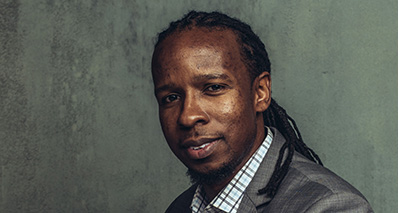
Credit: Oregon State University, CC BY-SA 2.0, via Wikimedia Commons
Ibram X. Kendi, Chain of Ideas: The Origins of our Authoritarian Age, One World, 2026, 550+xxxviii pages, $35.00 hardcover
Ibram Kendi is an academic who came to prominence following the death of George Floyd in 2020, when his How to Be an Antiracist (2019) quickly shot to the top of the New York Times bestseller list. The book’s most celebrated proposal is for an amendment to the US Constitution creating a federal Department of Anti-Racism (DOA). This department would be responsible for “preclearing all local, state and federal public policies to ensure they won’t yield racial inequity, monitor those policies, investigate and be empowered with disciplinary tools to wield over and against policymakers and public officials who do not voluntarily [?] change their racist policy and ideas.” If no policies can be formulated that avoid yielding racial inequity — as seems highly probable — we will presumably just have to shut the country down.
Besides making him a bestselling author, the Summer of George Floyd attracted lavish funding to Prof. Kendi’s Center for Antiracist Research at Boston University, most notoriously a $10 million donation from Twitter CEO Jack Dorsey. But not everyone was shocked when reports emerged in 2023 that the Center’s formerly abundant funds could not be accounted for, and Mr. Kendi was forced to lay off much of the staff. Two months later, however, Boston University announced that its audit had “found no issues with how [the Center’s] finances were handled.” Was the whole scandal really just a misunderstanding, or was BU’s audit an exercise in covering its institutional rear end? It is impossible for an outsider to say.
Whatever the case, Mr. Kendi’s professional career has gone from triumph to triumph. He has taught at Harvard, been awarded a MacArthur “Genius Grant,” is currently the director of a new Institute for Advanced Study at Howard University, and has just published a lengthy new book, Chain of Ideas.
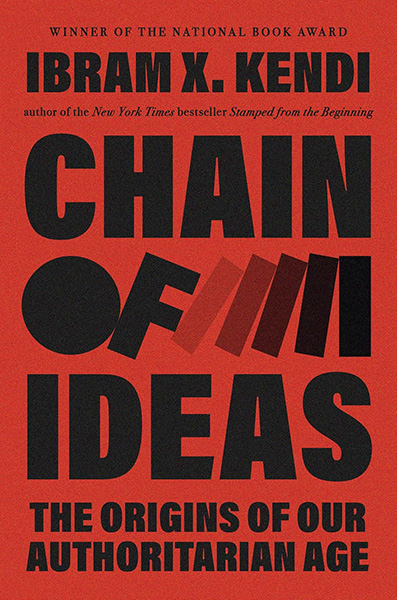
The book’s thesis is that we are living in an authoritarian age typified by Donald Trump and various European national populists, and that their authoritarianism derives from the “great replacement conspiracy theory.” This theory is a set of ideas connected to one another like links in a chain; together, they presumably form the chain that binds us all under Trump’s authoritarian despotism.
The author devotes each of the book’s ten chapters to one of these conceptual “links,” as well as to a political figure he dislikes. The first chapter, for example, features Marine Le Pen along with the idea that “white people lose out as peoples of color gain;” the second features Viktor Orban and the idea that “racial inequality data should be ignored,” and so on. The associations between the ideas and particular political figures seem arbitrary, and could probably be shuffled at random. The whole book, indeed, is written in a breezy, associative style without any real sustained argument.
A twenty-two-page prologue begins with Renaud Camus, the French novelist who coined the term “the Great Replacement.” His political activism began after he visited Lunel in the south of France in 1996 and noticed that the town’s Medieval center appeared to be populated almost exclusively by North Africans. It seemed to him as if “during our lifetime, and even less, France was in the process of changing peoples.”
The author characterizes Camus’ experience as follows: “He foresaw a state of emergency, a crisis of epic proportions, based on an old conspiracy theory that, after every generation, turned out to be pure fiction. An old theory without a name. He named it.” Does Mr. Kendi really believe that every generation of Frenchmen has perceived itself as being replaced by foreigners? Possibly. He mentions that a few black sailors had washed up in French port cities as early as the 1700s. This is meant to prove that nothing new is currently afoot. He puts no effort into actually comparing numbers, but writes as if ten were no different from ten million.
Mr. Kendi believes he can prove the imaginary character of the Great Replacement by citing how many people in Western countries are not immigrants: in the United States, for example, the percentage is “about 86.” This, of course, ignores the counting of children born to immigrants as natives, for which reason serious analysts speak not of immigrants but of “persons of migrant background” or some similar proxy for race — almost always the real subject in immigration debates, acknowledged or not. A country in which 14 percent of the population consists of first-generation immigrants is obviously undergoing very rapid demographic replacement. Is Mr. Kendi really too stupid or innumerate to understand this?
Chain of Ideas is sprinkled liberally with Nazi comparisons. For example, Mr. Kendi cites Trump’s program of deporting illegal immigrants to their countries of origin before triumphantly declaring that the Nazis “deported” people as well — namely, to Auschwitz. Populist parties saw their support increase following the economic downturn of 2008, which is just like the Nazis coming to power amid the worldwide depression. Some populists use the expression “cultural Marxism,” while the Nazis spoke of “cultural Bolshevism.”
Sometimes the relevance of these comparisons is more difficult to make out. Referring to the fears of “great replacement theorists” that immigrants will steal money and government benefits from whites, he turns to observe: “Incidentally, Nazi propaganda chief Joseph Goebbels cast Jewish people as ‘the World Enemy’ for their supposed total sway over ‘international high finance.’” This presumably demonstrates that immigrants will not take our money or government benefits.
Mr. Kendi devotes a couple of pages to denouncing Jean Raspail’s novel The Camp of the Saints, but his plot description indicates he has never read it: [the novel] “depicts throngs of immigrants from Asia and Africa swarming into Europe, New Zealand, and Australia.” It actually depicts Indians sailing to France.
One of Mr. Kendi’s pet themes is that antiracism involves a rejection of “zero-sum thinking.” He came across this idea in the book The Sum of Us (2019) by Heather McGhee. Prof. McGhee is herself a black antiracism scholar; her argument, as summarized by Mr. Kendi, is that
the zero-sum story has been supported by three false propositions sold to White Americans. The first is that “the presence of more people of color” is “a threat to their status.” Next, that “racial groups” are “in a direct competition.” And finally, that “progress for one group” is “an automatic threat to another.”
Mr. Kendi opposes such “zero-sum thinking” to the view that “human groups are natural allies against inequity.” Is this convincing?
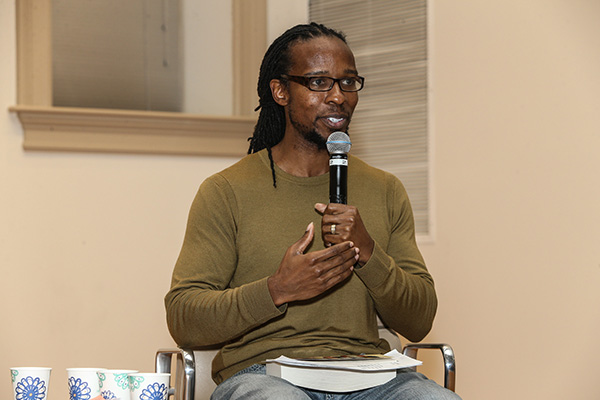
Ibram Kendi. (Credit: teachingforchange via Flickr, CC BY-NC 2.0)
It should be clear that certain forms of human interaction are “zero-sum games” where one party can only gain at another’s expense, whereas other interactions do not work on that principle. The more I acquire of a scarce precious metal like gold, for example, the less is left for everyone else: that is a zero-sum situation. Voluntary economic exchange in general, however, is not zero-sum, because each participant can get more of whatever he happens to value. A particular seller may willingly part with an ounce of gold in my favor because he values cash he receives from me in exchange more than he does the metal.
This distinction applies to the realm of ethnopolitics as well. For example, one black man immigrating to Scotland does not directly cause the death of one native Scotsman: in that sense, immigration is not a zero-sum game. However, the black percentage of the Scottish population cannot rise from two to four without the non-black population diminishing from ninety-eight to ninety-six. On a per capita basis, therefore, racial demographics is a zero-sum game. Carefully distinguishing where the zero-sum principle applies from where it does not should be an important part of serious sociopolitical analysis.
Mr. Kendi, however, makes no effort to think through particular cases. Having learned from Prof. McGhee that not all potential conflicts represent zero-sum games, he writes as if he were free to reject any argument a nationalist might make as an example of narrow-minded “zero-sum thinking.” This is simply incorrect: a qualified white man rejected for a position in favor of a quota-hire has indeed lost a zero-sum competition, and no vague injunction to reject “zero-sum thinking” can change that.
The author goes on to suggest that “zero-sum thinking” has been needlessly “reinforced by capitalist myths of natural scarcity.” In fact, as he explains, scarcity is a mere function of government policy, which “allows the super-wealthy to hoard resources.” With a simple change in policy, therefore, scarcity could disappear altogether. These are the kinds of things one can only learn from an antiracism scholar.
In essence, this bit of economic absurdity mirrors the overall thinking governing antiracism. Seeing whites doing better than blacks “by nearly every major socioeconomic measurement,” as he writes, Mr. Kendi infers that Western nations must be “structured with racist policies and practices” that put whites ahead — even when he cannot specify what these are, and despite decades of egalitarian efforts and propaganda. Whether he is looking at economic scarcity or group outcomes, his assumption is that policy is all-powerful and not subject to any external constraints (whether natural scarcity or inherited racial differences).
Returning to contemporary politics, the author attributes Marine Le Pen’s support for banning Muslim headscarves to a needless zero-sum mentality:
Le Pen’s zero-sum rhetoric can lead a Christian to see a Muslim woman as a replacer when she wears a hijab. But what if Christians saw Muslims as expanders instead? The more religions in any given society, the more freedom to practice religions. The more freedom to practice religions, the more freedom to practice one’s own religion.
The author seems never to have heard of jihad — the struggle against the non-Muslim world — support for which is a religious duty incumbent upon all Muslims. He would presumably reject any suggestion it might constitute a threat to the French as “zero-sum rhetoric.” The more jihad the immigrants wage against them, the greater freedom Frenchmen will enjoy to practice Catholicism! It is easy to see why the call to reject “zero-sum thinking” is so attractive to Mr. Kendi: It magically does away with conflicts of interest.
Unsurprisingly, the author highlights notorious mass murders carried out in the name of preventing white replacement by the likes of Anders Breivik, Dylann Roof, Brenton Tarrant, and Payton S. Gendron. In his view, these crimes are attributable not to the actual men who carried them out, however, but to “great replacement theory.” He writes: “Political theories turn humans into political murderers. . . . And there is no more violent political theory than great replacement theory.” (He does not pause to consider the record of communism, Islam, or other politically consequential ideas.)
Mr. Kendi never explains how “great replacement theory” turned a handful of men into murderers without doing the same to millions of nationalists equally concerned about demographic replacement. In his view, preventing such political violence is a matter of eliminating the “violent theory” that inspires it. White people must somehow be prevented from thinking they are being replaced.
One obvious way of accomplishing this goal would be by actually protecting them from replacement — by stopping immigration or repatriating non-white populations, for example. But Mr. Kendi could never consider this possibility because he has committed himself to the view that no replacement is occurring; it is all an imaginary “conspiracy theory.” The only thing for an antiracist to do, then, is to force his way into white people’s minds and directly control their thoughts, perceptions, and beliefs. That is a recipe for a total surveillance and police state, although the author himself may not be intelligent enough to see this.
Any serious discussion of race or “racism” would seem to require that some distinction be drawn between aspects of human behavior traceable to biology and other aspects not so traceable to biology. For example, it may be in the biological nature of our species to develop some sort of language, but biology cannot explain why the French call maison what English speakers call a “house.” In the past, such nonbiological details of human behavior were attributed to “historical factors,” but that older terminology was gradually replaced by the “culture” concept developed within the discipline of anthropology. Racialism might be defined as the view that racial biology (including genetics) informs human culture, without necessarily determining it in detail.
But Mr. Kendi either fails to grasp this distinction or rejects it. He actually uses the expression “cultural races” at one point (page 115). This allows him to denounce as “racist” any affirmation that Western Civilization may have real achievements to its credit that cannibal and headhunter societies do not. All cultural evaluation must necessarily imply hierarchy in some sense, and that is “racist.” Of course, he would presumably have to admit that an “antiracist” culture — whatever that might be — would be preferable to a “racist” one. But he doesn’t appear to have thought through such issues.
I will close with a confession: for the first time, I was unable to make it all the way through a book I meant to review for American Renaissance. This essay is based on the first five out of ten chapters. But even a spoonful is often enough to demonstrate the incompetence of a cook. I am as unwilling to take up more of the reader’s time as of my own with this academic rent-seeker’s miserable excuse for a book.