Selma to Montgomery, 30 Years Later
Marian Evans, American Renaissance, May 1995
March 1995 marked the 30th anniversary of the Selma-to-Montgomery voting-rights march. The surviving leaders of the demonstration recently met to commemorate what was one of the most effective efforts of the civil rights era. The atmosphere was one of amity and self-congratulation, in which it was taken for granted that the marchers and their purposes were noble and their opponents were despicable racists. In an act of contrition, Joe Smitherman, who was mayor of Selma 30 years ago, presented the keys to the city to a group of aging civil rights leaders.
Rituals like this firmly establish the today’s view of who was right and who was wrong. And yet, does Mr. Smitherman, who saw the now-sanctified event as it really unfolded, not harbor even fleeting reservations about the new America that the civil rights movement created? Perhaps not. George Wallace, former governor of Alabama, recently gave a framed photograph of himself to Rosa Parks, who started the Montgomery bus boycott in 1955. He inscribed it “To a great lady.”
The 1965 demonstrations in Selma and Montgomery were part of a massive campaign to secure voting rights for blacks. In the states of the former Confederacy, it had been only during Reconstruction that blacks had had more or less uncontested voting rights. In Alabama, blacks were first given the vote under a state constitution written in 1867 by Northerners and forced upon the state by the U.S. Congress.
A new constitution, written in 1901, eliminated most blacks from politics, by limiting suffrage to people who could read and understand the U.S. Constitution, and who had been employed during the previous year or who had paid property taxes. The new constitution also required separate schools for black and white children. Since that time, as in most of the South, the vigor with which suffrage restrictions were applied to blacks varied from region to region.
In 1965, black civil rights leaders seemed to be winning every battle they fought. The Supreme Court outlawed school segregation in 1954, and the “sit-in” movement, begun in 1960, successfully integrated many Southern lunch counters, restaurants, hotels and churches. President Eisenhower used federal troops forcibly to integrate public schools in Little Rock, Arkansas, and in 1962 President Johnson used them to overwhelm resistance to integration at the University of Mississippi. The movement’s greatest success, however, had been the passage of the Civil Rights Act of 1964, which prohibited discrimination in employment and public accommodation.
The national press was warmly sympathetic to black demonstrators and their white supporters. The movement basked in an aura of great moral superiority, and the obvious next step for what seemed to be an unstoppable juggernaut was to secure unrestricted voting rights for Southern blacks.
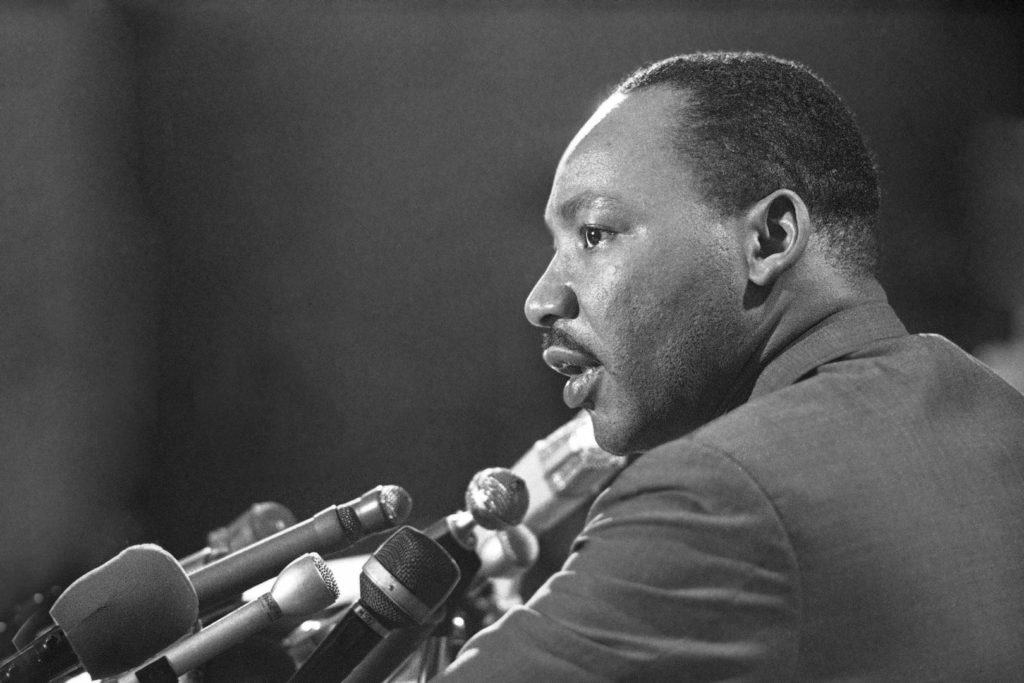
Martin Luther King, who led this stage of the movement, was by then world famous. Having come to prominence only ten years earlier during the Montgomery bus boycott, he was now a winner of the Nobel Peace Prize and a frequent guest at the White House. He chose Dallas County, Alabama as the target for demonstrations because it had been particularly inhospitable to black voters. Although there were more blacks than whites of voting age in the county, 28 white voters were registered for every black. Selma, 50 miles from Montgomery, was the county seat.
A Board of Registrars examined prospective voters, black and white. It had a small office in the Selma courthouse and could handle no more than 50 applicants a day. On January 18th, 1965, King and his close assistant, Ralph Abernathy, led six or seven hundred people to the courthouse and demanded that they be registered. There was already a line of ordinary applicants, and the group was turned away. The demonstrators marched back to their headquarters at Brown’s Chapel Church, and held a press conference, claiming — correctly — that blacks had been denied registration. Overlooked were the facts that blacks had been among those waiting to be tested and that in the days before the demonstration a number of blacks had been duly registered.
Similar nationally-reported exercises took place throughout the months of January and February. King was constantly in and out of town, flying around the country raising money and giving press conferences. He returned to give speeches and lead marches. Meanwhile, more and more northern whites trickled into town.
At the time, Selma had a population of 29,000 people, of whom 15,000 were black. It took only a small crowd to paralyze the town, and at the height of the demonstrations approximately 11,000 outsiders were swarming the streets. Selma’s mayor, Joe Smitherman, complained that for three months he spent three quarters of his time dealing with out-of-town demonstrators. Selma police were swamped with complaints of thievery, and townspeople were soon heartily sick of the visitors, many of whom were drunk and left garbage wherever they went.
Some Northerners came just to have a good time. Many were “beatniks,” who drifted across the country from one demonstration to another. They had no money for hotels which were, in any case, commandeered by the hundreds of journalists covering the demonstrations. Many whites of both sexes found accommodation in black churches and in the George Washington Carver Homes, the black housing project.
Intimate mixing of the races in this fashion was unheard of in the rural South, but even more shocking to the people of Selma was the public sexual behavior of the demonstrators. If the accounts of what can only be described as public debauchery were not given in sworn affidavits by citizens, state troopers, and national guardsmen, they would be difficult to believe (see following story). Residents of Selma could be forgiven for beginning to wonder whether the demonstrations were as much about public interracial copulation as they were about voting rights. Many of the journalists were disgusted by what they saw, and complained that candid accounts of the demonstrators’ behavior were edited out of the stories they filed.
Language as well as behavior was edited. On one occasion, James Forman, secretary of the Student Non-violent Coordinating Committee (SNCC), spoke at the Beulah Baptist Church in Montgomery. Addressing a mixed-race group that included many ministers, nuns, and church women, he said: “If the Negro isn’t given his place at the table of democracy . . . it’s time for us to knock the f***ing legs off the table.” Some of the ministers expressed surprise at this language, but Forman offered no apology.
A few minutes later, Ralph Abernathy tried to smooth things over by saying, “I’m sure that God will forgive him, that the television crews will delete it from their films, and newspapermen will not print it.” A beatnik came to Forman’s defense: “What’s wrong with ‘f**k’,” he asked; “It’s a good old American word, and expressive.”
There were demonstrations in Montgomery during this period as well. On March 10, at about 8:00 p.m., approximately 100 people were being harangued on a well-lit street a short distance from the state capitol. One of the black leaders of the group then said in a loud voice, “Everyone stand and relieve yourselves.” Practically the entire crowd, male and female, young and old, black and white, did as they were told, as rivulets ran almost to the next block. Two blacks were arrested for, according to a bystander, “particularly lewd and offensive exposure of their private parts.”
Adding to public revulsion for the demonstrators was the sight of men and women in religious garb drunk in public and fondling each other. The civil rights movement had always draped itself in religion, and King made a point of giving ministers and priests very visible roles. The presence of clerics was so useful that some of the demonstrators dressed as priests or nuns appear to have been impostors.
This may have been the case during a small demonstration in Montgomery on March 16th. A group of 34 men, most dressed as priests, arrived at the capitol late in the evening and insisted on praying on the capitol steps. Finally, at 3:00 a.m. the police let them say the Lord’s Prayer on the bottom step. As they broke up to leave, two photographers came running across the street. One of the men dressed as a priest said to one, “You stupid son-of-a-bitch, after all this time here, you didn’t get a picture of us saying a prayer on the bottom step.” An Alabama state policeman said that many of the “priests” swore like sailors and that he doubted more than half were authentic.
It may have been the disgraceful behavior of false clerics that prompted one of the three killings associated with the Selma demonstrations. On March 8th, a white Unitarian minister from Boston, James Reeb, was brutally clubbed to the ground as he left a restaurant, and died two days later. The night before Reeb died, the demonstration leaders held an all-night, out-door vigil to pray for his recovery. Disgusted journalists noted that a number of young couples at the rear of the crowd fornicated during the services.
About this time, Jimmie Lee Jackson, a black civil rights leader, was shot and wounded in an altercation with police. Activists swept him away, medical treatment was delayed, and the man died. The Chief Deputy Sheriff of Dallas County thought the delay was deliberate. “I believe they wanted him to die,” he said; “They wanted to make a martyr out of him. . . .”
The day after Rev. Reeb was clubbed, Selma demonstrators defied a court order and set out to march the 50 miles to Montgomery. As they crossed the Edmund Pettus bridge leading out of town, they were met by a line of state troopers standing shoulder to shoulder. “This march will not continue. . . .” boomed the public address system, but there was deadlock for 15 to 20 minutes, while King and his associates knelt to pray, and police pleaded with the demonstrators to go home. When officers finally moved forward with night sticks held horizontally and tried to push the demonstrators back, the resulting mayhem ended in clouds of tear gas. Eighteen officers were injured by flying rocks and bottles.
According to press accounts, the police had “whipped and clubbed” unoffending demonstrators, and television pictures showed crowds of fleeing blacks choking on tear gas. Reeb died the day after the confrontation at the bridge. These two events were a tremendous propaganda advantage for King, and they brought thousands more demonstrators to Selma from the North.
A few days later, President Lyndon Johnson went before Congress and evoked Reeb’s name in a strong call for legislation to ensure voting rights for blacks. He also ordered mobilization of the Alabama national guard to protect a second attempt at a Selma-to-Montgomery march, this one newly sanctioned by a federal judge.
Thus began, on March 21, 1965, the now-famous march. King, Abernathy, and U.N. Undersecretary Ralph Bunche — also a Nobel Peace Prize winner — took the lead down Selma’s Sylvan Street. On the way to the Pettus Bridge, the crowd marched past a record store, where an outside speaker alternately blared “Dixie” and “Bye, Bye, Blackbird.” At the head of the procession a mixed group of young men carried the U.S. flag upside down — the sign of distress. Many demonstrators wore “GROW” buttons, which stood for “Get rid of Wallace.” Nearly two thousand Alabama National Guardsmen, 100 FBI agents, 75 federal marshals, and dozens of state and county police officers guarded the marchers.
Just outside Selma, the Citizens Council of America, an anti-integration group, had set up posters showing King sitting next to known Communist leaders at the Highlander Folk School in Tennessee. The caption read, “Martin Luther King at Communist Training School.”
History books call this a “massive” demonstration and, indeed, some 11,000 people set off on the first leg of the journey. However, the highway to Montgomery narrowed to two lanes shortly after leaving Selma, and permission was granted for only 300 marchers on all but a few miles of roadway. Most of the crowd therefore streamed back to Selma.
Although it is impossible to know even their approximate numbers, some of the demonstrators were shills. A few openly boasted that they were in Selma because they had been offered food, money, and sex. Dora Brown’s unusual financial arrangements came to light when the checks stopped coming. In a sworn affidavit she testified as follows:
I was at Brown’s Chapel Church with the movement along with a blind man and a one-legged man who were both white people. I am one-armed and we were told at the time that we were the ones they needed worst, since we were handicapped it would help the movement. We were told that if we would make the march from Selma to Montgomery we would be paid $100.00 per month plus food and clothes… James Gildersleeve would pay us.
I have received three checks from Gildersleeve for $100.00 each but now he has quit paying me.
Gildersleeve was not to blame. Rev. Frederick Reese, president of the Dallas County Voters League, was arrested after other blacks accused him of stealing thousands of dollars in movement funds.
Miss Brown’s unhappy testimony continues: “Gildersleeve told me that he couldn’t pay me since Frederick Reese had gotten all the money. Gildersleeve gave me one pound of lard, some greens, a watermelon and $1.00 in money. He said that is all he could give.”
It is not recorded whether Miss Brown or the one-legged white man were among the select 300 who spent four nights on the road to Montgomery. It is known that the evenings were characterized by the now-usual drunkenness and fornication. On at least one occasion, police officers prevented newspapermen from photographing the revelry. And even among this inner circle, there were frequent complaints about stolen clothes and missing bed rolls.
Most of the marchers slept in the open except for King, who set up housekeeping in a trailer that was moved from camp to camp. There are no reports on how he spent his evenings, but his inclinations are now well known. His companion, Ralph Abernathy, was not a model cleric, either. In 1958, a Mr. Davis was arrested for threatening Abernathy with a hatchet because Abernathy kept trying to have sex with Mrs. Davis. She testified in her husband’s defense that Abernathy had first seduced her when she was a 15-year-old member of his congregation.
As the march went on, the press continued its adulatory, front-page coverage. All around the country, supporters held sympathy marches and worship services.
The night before the last leg of the trek, more than 30,000 people gathered in a field a few miles outside of Montgomery for a free concert. Harry Belafonte, Nina Simone, Sammy Davis, Jr., Billy Eckstein, Mahalia Jackson, the Chad Mitchell Trio, and Frankie Laine serenaded the crowd until nearly one in the morning.
On March 25, the 30,000 were joined by another 5,000 as King and Abernathy led the march into Montgomery, up to the steps of the state capitol. The city was festooned with Confederate flags, one of which fluttered along with the state flag over the capitol building. It was widely — and falsely — reported that not a single United States flag flew in Montgomery that day. The Stars and Stripes waved, as it always did, from a tall flag pole on the capitol grounds.
The leaders of the march asked to see Governor George Wallace, so they could present him with a list of grievances. He refused to meet them. The rest of the day was filled with speeches by Hosea Williams, Roy Wilkins, James Forman, Ralph Bunche and other black leaders. Joan Baez and Peter Paul and Mary were among those who entertained the crowd, which finally broke up around four p.m. The march was over. It took until midnight for sanitation crews to clean up the mountains of trash demonstrators had left behind.
Late that evening, a third killing took place when a white civil rights worker name Viola Liuzzo was shot to death as she was driving between Selma and Montgomery. Both the press and President Johnson were outraged, although accounts of the killing were often incomplete (see story, page 7).
Given the sanitized view of the demonstrations that had been broadcast to the world, Alabama congressman William L. Dickinson undoubtedly met much skepticism on March 30 when he tried to convey a different picture to his colleagues on the floor of Congress:
Drunkenness and sex orgies were the order of the day in Selma, on the road to Montgomery. There were many — not just a few — instances of sexual intercourse in public between Negro and white. News reporters saw this — law enforcement officials saw this. . . .
Has anyone stopped to ask what sort of people can leave home, family and job — if they have one — and live indefinitely in a foreign place demonstrating? This is no religious group of sympathizers trying to help the Negro out of a sense of right and morality — this is a bunch of godless riffraff out for kicks and self-gratification that have left every campsite between Selma and Montgomery littered with whiskey bottles, beer cans, and used contraceptives.
The nation was profoundly uninterested. In fact, the Selma-to-Montgomery march was probably one of the most effective events in the entire civil rights movement. Unlike the “March on Washington” in 1963, in which 200,000 people took part and where King gave his “I Have a Dream” speech, the agitation in Selma and Montgomery led directly to national legislation. The nation was riveted to the march, and President Johnson constantly referred to it in his push for a voting rights bill. The killings of James Reeb and Viola Liuzzo were also a great stimulus to lawmakers.
The legislation passed and was signed into law in August, 1965. In what would appear to be a direct abrogation of the reserved powers specified in the Tenth Amendment, it prohibited all state tests of voter literacy and education. It even authorized federal elections examiners to register voters who had been rejected by state authorities, and to patrol the polls to see that such people voted. The law affected states outside the South, notably New York, which had required that voters be literate in English. New York promptly sued on Tenth Amendment grounds, but the Supreme Court ruled in 1966 against the literacy provisions — to great rejoicing among the state’s Puerto Ricans.
With a total of three deaths, the march was one of the most sanguinary episodes in the civil rights period. However, very few demonstrators were harrassed or assaulted. In retrospect, it is surprising that there was not more violence.
As invariably happens in racial matters, a group of whites with little experience of blacks saw fit to give instruction on race relations to people with a great deal of experience. Northerners invaded the South, a deeply conservative society, demanding that Southerners change their way of life. To add insult to arrogance, Northerners then proceeded publicly to violate some of the most deeply felt norms of privacy and decency. The self-control — even passivity — of the citizens of Selma and Montgomery is as astonishing as the degeneracy of the demonstrators. Perhaps even Mayor Smitherman, desperately trying to run a city overrun with disorderly demonstrators, harbored thoughts of homicide.
Now, 30 years later, Selma is a sacred name, one of the stations of the cross on the road to integration and racial equality.
The following excerpts are from sworn affidavits made by witnesses to the events in Selma and Montgomery in March 1965.
V.B. Bates, Deputy Sheriff of Dallas County: “To begin with, I saw white females in from other counties, other states I believe, building up their sexual desires with Negro males. After a few minutes of necking and kissing, the Negro male would lead them off into the Negro housing project. I watched this procedure many times.”
Black man, name withheld: “[M]en and women used this room [in the Student Non-violent Coordinating Committee headquarters] for sex freely and openly and without interference. On one occasion I saw James Forman, executive director of SNCC, and a red-haired white girl whose name is Rachel, on one of the cots together. They engaged in sexual intercourse, as well as an abnormal sex act. . . . Forman and the girl, Rachel, made no effort to hide their actions.”
“During this same period, March 8, 9, and 10, a large number of young demonstrators of both races and sexes occupied the Jackson Street Baptist Church for approximately forty-eight hours. . . . On one occasion, I saw a Negro boy and a white girl engaged in sexual intercourse on the floor of the church. At this time, the church was packed and the couple did nothing to hide their actions. While they were engaged in this act of sexual intercourse, other boys and girls stood around and watched, laughing and joking.”
Corporal H.M. Brown, Alabama State Troopers: “I observed on many occasions the so called men of the cloth, who were white, fondling the breasts and buttocks of black female demonstrators. On numerous occasions, I saw couples of the opposite sex and color leaving the crowd, fondling each other and going into the houses and alleys along Sylvan Street.
“Since 1961, I have observed mobs and demonstrations, but the crowd of demonstrators in Selma, Alabama, was the lowest scum of the earth. This gathering of demonstrators in Selma included the largest crowd of sex degenerates that I have ever observed in one place in my life. They had no morals or scruples and did not appear to care who saw them during their orgies.”
Captain Lionel Freeman, Alabama State Troopers: “One Negro who was standing beside a priest and both standing about three feet from a line of troopers, made several attempts to provoke a trooper into hitting him. The Negro waved three dollar bills in the trooper’s face and then dropped them, saying ‘Why don’t you pick them up, I know you need it.’ . The Negro then said, ‘I’ll sleep with a white woman tonight.’ The priest seemed to think this was real funny.”
“[S]everal newspapermen who were allowed to go to the rear of the demonstration came back up to the front and told us they observed white and Negro couples in the act of sexual relations. They told us that they had sent the story and pictures home to their papers. One told me that the only thing he recognized about his story when it was printed was his name.”
Lieutenant J.L. Fuqua, Alabama State Troopers: “I also saw Negro men feel the breasts and butts of white girls, making no attempt to hide this, but rather appearing like they wanted everyone to see them.”
Charles R. McMillan, Selma policeman: “Both Negroes and white demonstrators were bedding down side by side. A young teenage Negro boy and girl were engaged in a sexual intercourse [sic] that was interrupted by a newsman who attempted to take a picture of the act.”
Selma citizen: “I, Marion J. Bass, did, on the night of the 23rd of March 1965, see at the camp site of the Selma to Montgomery march, a young white girl and a colored man having sex relations. They were on the ground out in the open and did not try in any way to hide as I walked within six or eight feet of them.
“There were many colored girls and white boys laying in the same sleeping bags. I also saw a white girl about 17 years old and four colored boys get into the back of a truck and close the doors. . . . They were in the truck about 45 minutes and when they opened the door to get out, the girl was dressing.”
Lieutenant R.E. Etheridge, Alabama State Troopers: “The action and movement of the two wrapped in the quilt left no doubt whatever that they were having sexual intercourse. They were within 30 feet of the main body of demonstrators, and in plain view of them. They remained on the ground for about 20 minutes, got up and went toward Brown’s Chapel Church.”
“On the morning of March 14th, at about 11:00 a.m. I saw a white preacher with a Negro girl in the back seat of an automobile. He had her breasts out of her blouse and was handling them.”
“I observed white ministers on at least three occasions who were in what appeared to be a very intoxicated condition.”
First Lieutenant Samuel Carr, Alabama National Guard: “I hereby further swear and attest that during such time of duty with my National Guard unit, I personally saw one case of sexual intercourse between a young white boy and Negro girl. I further swear and attest that I saw occasions of public urination. . . .”
Cecil Atkinson, resident of Prattville, Alabama: “Between Selma and the first stop, I observed both men and women relieving themselves in public, all together and making no attempt to conceal themselves at all.”
“At one point I observed a young beatnik-type man with his collar turned around to resemble a priest. He told me that it was ‘the way to get along.’ Another told me that he had been offered $15 a day, three meals a day, and all the sex he could handle if he would come down and join in the demonstration from up North.”
Mrs. Nettie Adams, resident of Montgomery: “There were white and Negro people all over the Ripley Street side of St. Margaret’s Hospital [in Montgomery on March 15] . . . . They were all kissing and hugging. This one particular couple on St. Margaret’s lawn was engaged in sexual relations — a white woman (skinny blond) and a Negro man. After they were through, she wiggled out from beneath him and over to the man lying to the left of them on the lawn and started kissing and caressing his face.”
[Editor’s Note: This review appears in A Race Against Time: Racial Heresies for the 21st Century, a collection of some of the finest essays and reviews published by American Renaissance. It is available for purchase here.]