A Possible Explanation for the Flynn Effect
Richard D. Fuerle, Majority Rights, January 11, 2008
The Flynn Effect, discovered by Richard Lynn (Lynn, 1977) and documented and named for James R. Flynn (Flynn, 1984, 1987), is a world-wide increase in IQ scores of about 3 IQ points per decade. That is, people today score higher on an old IQ test than people the same age did who took the same test decades earlier.
By suggesting the malleability of intelligence and the possibility that tweaking the environment might increase it, the Flynn Effect has raised the hopes of egalitarians, who believe that “all the races are equal in intelligence” (United Nations, 1950; also Flynn, 1999) and fervently want to erase the black-white IQ gap. Unfortunately, the cause of the Flynn Effect has not yet been pinpointed and, until it is, a program cannot be designed that will put the cause of the Flynn Effect to work increasing black intelligence. Moreover, as many experts suspect, the Flynn Effect may be only an increase in IQ scores, not an increase in real intelligence (i.e., the genetic potential for high intelligence), which may actually be declining (Lynn, 1996).
A possible explanation for the increase in IQ scores is that children today mature sooner, both physically and mentally, than children did decades ago (Sarich, 1999). Today’s children score higher, not because their real intelligence has increased, but because their brains are more mature. A 10 year old today has a brain that has grown faster and has more neural connections than the brain of a 10 year old who lived, say, 50 years ago. Because today’s 10 year olds have brains that, perhaps, 12 year olds had 50 years ago, they do better on an IQ test taken by 10 year olds 50 years ago. Psychologists think they are comparing identical groups of children — 10 year olds to 10 year olds, but they are actually comparing apples and oranges — 10 year old brains to 12 year old brains. Real intelligence has not increased, children just acquire it sooner, and fully mature people today may actually be less intelligent than fully mature people were decades ago.
Table 1 (Terman et al., 1973) shows Flynn Effect changes in average IQ scores.
Table 1
Estimates of the Average 1972 IQ Scores When the 1972 Stanford-Binet Test Performance Is Referenced to the 1937 Norms
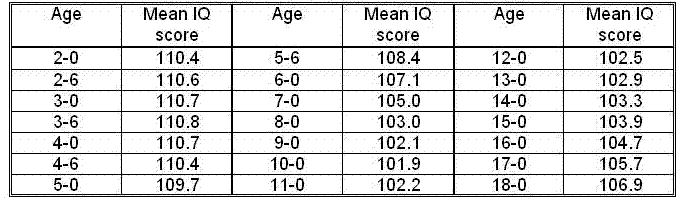
That the maximum increase in IQ scores occurred between the ages of 2-0 and 4-6 is strong evidence that accelerated maturation is responsible for the Flynn Effect because not much else could cause such a large increase in the IQ scores of American children who are that young. The scores fall from age 3-6 to age 10-0, then rise again, consistent with faster maturation to age 3-6, followed by a slowing of the rate of maturation up to puberty and a second acceleration at puberty, which now begins earlier so the effects of the second acceleration start showing up at age 11-0.
The difference between black and white IQ scores is small at a young age, then increases towards adulthood. Lynn (2006, p. 45) reports an average IQ of 92 for 2 year old sub-Saharan Africans (s-S Africans), which drops to 67 by adulthood. (Lynn, 2006, p. 37). There is good evidence that blacks mature faster than whites, and that the black brain matures earlier than the white brain. (Rushton, 2000, pp, 147-150). The greater maturity of 2 year old s-S Africans raises their IQ scores, so they test only 8 IQ points (100 — 92) behind 2 year old whites. By adulthood, however, when both white and black brains are fully mature and therefore at the same level of maturity, the difference in IQ scores is much larger, 33 IQ points (100 — 67). This suggests that lower IQ scores at maturity may be the result of faster maturation, and that the Flynn Effect is due to faster maturation.
Adult female brain size, adjusted for body size, is about 100cc smaller than male brain size (Ankney, 1992; Rushton, 1992) and average adult female intelligence is about 3.63 IQ points (Jackson, 2006) or about 5 IQ points (Lynn, 2006) lower. Up to about age 14, however, faster-maturing girls have identical or higher IQ scores than boys, but after boys have their growth spurt at puberty they catch up and score higher than girls. (Colom, 2004). This also suggests that faster maturation may result in a lower IQ at maturity, and that the Flynn Effect is due to faster maturation.
If IQ scores are lower at maturity, real intelligence has very likely fallen. If it has, the Flynn Effect is not the good news that egalitarians hoped it would be, but is instead ominously bad news because it means that people are becoming less intelligent. The higher fertility of less intelligent people is often given as the reason for a dysgenic drop in real intelligence from one generation to the next (Lynn et al., 2004), but that would not explain a drop in real intelligence within a population as it ages; accelerated maturation would.
The Right Tail Effect
Figure 1 shows the bell-shaped IQ curves for males (blue) and females (red).
Figure 1
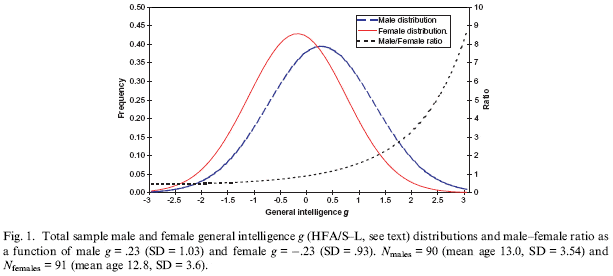
(Nyborg, 2005). “General Intelligence” is the number of standard deviations (SDs) above or below the mean IQ of all the test takers; one SD is about 15 IQ points and males have a greater SD than females. “Frequency” times 100 is the percentage of males or females who have the corresponding IQs. “Ratio” is the number of males at an IQ level divided by the number of females at that level.
In Figure 1, the number of males and females is the same (i.e., the total area under the male curve is the same as the total area under the female curve), but there are more males at the high end of the curve (i.e., the area under the male curve above, say, 1 SD is greater). There are two reasons for that: (1) the male mean IQ is higher, which disproportionately increases the number of males at the high end of the curve and reduces the number at the low end. That is, if the male mean is 5% greater than the female mean, the number of males who are above, say, 1 SD will be more than 5% greater than the number of females who are above 1 SD, and (2) the male curve has a greater SD, i.e., fewer males than females are in the middle of their curve and more are at the right and left ends.
The dotted line in Figure 1 is the number of times more males there are than females at each IQ level. The difference between the male and female means and SDs causes the dotted line to rise rapidly as IQ increases, which is the “right tail effect.” Even though the difference between the male and female means and SDs is only a few IQ points, those differences cause a large difference between the number of males and the number of females who have high IQs.
Because the difference between average black IQ and average white IQ is much greater than the difference between average male IQ and average female IQ, and the black SD is less than the white SD (Jensen, 1998, p. 353; La Griffe du Lion, 2000), the black-white right tail effect is greater than the male-female right tail effect (Herrnstein et al., 1994, p. 279). As a result, the number of high IQ blacks is far less than the number of high IQ whites.
The right tail effect is a mathematical result that occurs when any two groups have different means and/or different SDs. The two groups may be tested at the same time, but differ in age, sex, race, etc. (e.g., males and females, blacks and whites), or the two groups may be similar, but tested at two different times (e.g., 10 year olds in 1920 and 10 year olds in 1970). If two similar groups are tested decades apart and the curve with the higher mean is at the later time, then not only will IQ scores be increasing, but high IQ scores will be increasing disproportionately. Also, the increase in the number of high scorers will be matched by an equal decrease in the number of low scorers. In other words, as long as the size and shape of the later curve is the same as the earlier curve, a right tail increase (more high scorers) is matched by an equal left tail decrease (fewer low scorers), and a right tail decrease (fewer high scorers) is matched by a left tail increase (more low scorers).
The Left Tail Effect
A study in Spain (Table 2) shows that the Flynn Effect increased low-end scores much more than high-end scores, i.e., the number of people with low scores decreased more than the number of people with high scores increased.
Table 2
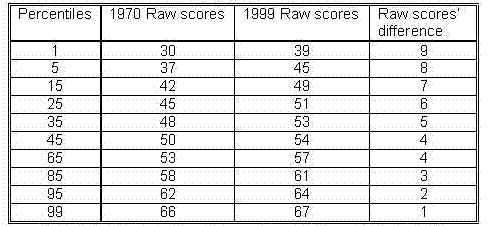
Similar to the results in Table 2, SAT scores, which correlate 0.8 with IQ scores (Seligman, 1991; Flynn, 1984), dropped at the same time that IQ scores were rising. (Deary, 2001, Chap. 6; Herrnstein et al., 1994, pp. 425-427). If the Flynn Effect is due to an increase in real intelligence then it is difficult to explain why SAT scores would fall at the same time that IQ scores increase. However, if the Flynn Effect occurs because the children taking the test are more mature, then an explanation becomes possible, namely that the children taking the test are both more mature and their real intelligence has fallen.
The IQ tests are taken by everyone, but the SAT takers are a more intelligent subset. If we compare people who took the SAT decades apart, we find that SAT scores are lower. The reason is that real IQ has fallen and, due to the right tail effect, the number of people at the right side of the SAT curve has fallen disproportionately.
On the other hand, if we compare people of the same age who took the IQ tests in the same years that the SAT was taken, we find that IQ scores have increased. The reason is that the test takers who took the more recent IQ test were more mature. Although increased maturity raised the IQ scores of everyone, the decrease in real intelligence disproportionately lowered the number of people at the high end, ergo, rising IQ scores and falling SAT scores and, in Table 2, the number of people with high scores did not increase as much as the number of people with low scores.
The Flynn Effect in Mature Adults
Once the brain is fully mature, there obviously can be no effect on IQ scores due to accelerated maturation. The density of grey matter in the brain increases to age 30 then rapidly declines, but the volume of white matter in the brain does not peak until about age 45. (Sowell et al., 2003). Thus, any increase in the IQ scores of people over those ages cannot be attributed to accelerated maturation. While IQ scores decline somewhat in the elderly (Mortensen et al., 1993; Raven et al, 1998, Graph G1), today’s elderly nevertheless score higher than elderly people did decades earlier. In one study, people of ages 20 to 70 who took an IQ test in 1942 were compared to people of ages 20 to 70 who took an IQ test in 1992. Those who took the 1992 test, including people over 45 and even people who were 70, did better than people the same age did who took the 1942 test. (Raven et al., 1998, Graph G2).
However, between 1900 and 2000 life expectancy at birth for all races and both sexes in the United States increased 63% from 47.3 to 77.0 (CDC, 2006, Table 27). Also, there is a right tail effect because intelligent people live longer than less intelligent people (Hemmingsson et al., 2006; Gottfredson et al., 2004) so, as a population ages, the number of people in the higher IQ percentiles increases disproportionately. In other words, people whose brain is not fully mature have increased IQ scores due to accelerated maturation, and people whose brain is fully mature have increased IQ scores because, while everyone is living longer, more intelligent people live longer than less intelligent people.
The Flynn Effect appears to have stalled or even reversed in Norway and some other countries (Sundet et al., 2004; Teasdale et al., 2005 & 2007). If accelerated maturation, as proposed, is the cause of the Flynn Effect, then in these countries children have stopped maturing earlier, either because the rapidity of maturation has reached a biological limit or because whatever was causing more rapid maturation has diminished or reversed.
Children Mature Earlier
There is considerable evidence that children today mature earlier. “In the abandoned medieval village of Wharram Percy in Yorkshire, the churchyard has yielded hundreds of skeletons for analysis. There ten-year-olds were around 8in shorter than children today: by the time they were fully grown they were nearly as tall as modern adults.” (Roberts et al., 2005).
A 1997 study of 17,000 American girls (Herman-Giddens et al, 1997) and a British study at Bristol University (Golding, 2000) tracked 14,000 children and found one in six girls with signs of puberty by eight years old, compared to one in 100 a generation ago. “The average age at menarche — when periods start — has plummeted over the past 150 years in western societies from around 17 years old down to 12 or 13.” (Macleod, M., 2007). Boys, too, showed an earlier onset of puberty. (Karpati, 2002).
Possible Causes for Earlier Maturation
A number of reasons have been given for the earlier maturation of children. Explanations have included hereditary and diet factors, increases in obesity and body weight, chemicals acting as endocrine disrupters, and the sexualization of children by the media.
An explanation that is consistent with experimental evidence and evolutionary theory is that earlier maturation is due to increased calories. It is known that substantial calorie reduction can extend the maximum life span of a variety of organisms, including monkeys, rats, mice, flies, worms, and yeast, by 30 to 70 percent (Weindruch et al., 1986; Yu et al., 1985). Restricting calories reduces aging in humans, which can be expected to extend life span. (Youngman et al., 1992; Roth et al., 2002; Heilbronn et al., 2003; Masoro, 2005). If reduced calories increase life span, increased calories should shorten life span by accelerating maturation.
That children consume more calories is shown by the increase in childhood obesity, which has been widely publicized and is a major concern. “A multivariate analysis confirms that obesity (as measured by BMI) is significantly associated with early puberty in white girls and is associated with early puberty in black girls as well, but to a lesser extent.” (Kaplowitz et al., 2001; also, Lee et al., 2007).
An earlier maturation, i.e., adapting a more “r” reproductive strategy (Rushton, 2000), when excess calories are consumed over a significant period of time, enables individuals to have more surviving offspring. Conversely, a delay in maturation when food is not available prevents the birth of children who are not likely to survive. The poorly nourished !Kung women of Namibia begin menstruation at 17, while well-fed white Americans begin at 12. (Arsuaga, 2001, p. 218). “Obesity can lead to larger babies . . . ,” increasing the need for Cesarean births, further evidence that increased calories accelerates maturation. (Susman, 2006).
Lynn (1990) has suggested that the Flynn Effect may be due to improved nutrition. Better nutrition, however, implies not just an increase in IQ scores, but that a deficiency in the brain has been remedied, so that real intelligence has increased, which is not consistent with Lynn’s later position that real intelligence has fallen. (Lynn et al., 2004). Given the brain’s first claim on the body’s resources and the absence of supporting data, that hypothesis does not seem likely except for severe nutritional deprivation, which is not applicable to developed countries that have had Flynn Effects. If the Flynn Effect is due to increased calories, however, the Effect would be only the normal age-related increase in intelligence occurring at a younger age.
It is primarily the quantity of food that affects the maturation rate, not its nutritional quality. Indeed, overall nutrition in the industrialized nations may have actually declined because, despite the fortification of milk, cereals, salt, and other foods with vitamins and other nutrients, there is a greater consumption of low-nutritional, but high-calorie, “junk” food and sugary soft drinks.
There is evidence for increased head circumference (Ounsted et al., 1985) and brain weight (Kretschmann et al, 1979) in children, and also for brain weight in adults (Miller et al., 1977). Faster maturation explains the increased head circumference and brain weight in children. The small increase in the brain weight of people whose brains are fully mature is due to (1) the fact that, on average, more intelligent people have larger brains (“r” = 0.44, Lynn, 2006, p. 214) and (2) the increased life span of more intelligent people, resulting in a right tail effect — a disproportional increase in the number of more intelligent mature people, as explained above.
Testing the Proposed Explanation
There are a few ways that the proposed explanation can be tested. Group A are children of several decades ago who at that time had a chronological and maturity age of, say, 10. Group B are children living at the same time as Group A, but they had a chronological and maturity age of, say, 12. Group C are more mature children living today who, compared to Groups A and B, have a chronological age of 10 and a maturity age of 12. Group C takes the same two intelligence tests that Groups A and B took decades ago. The proposed explanation predicts that the scores of Group C will be higher than the scores of Group A due to their increased maturity, but lower than the scores of group B due to their decreased real intelligence.
The proposed explanation also predicts a positive correlation between the increase in IQ scores and the number of years that the age of puberty (and other indicia of maturation) has dropped.
Assuming that increased calories are the principal cause of faster maturation, a similar positive correlation is predicted between yearly increase in calorie consumption (or increase in obesity) and the increase in IQ scores, though there may be a lag time between the two and, of course, the effect will eventually reach a biological limit.
The proposed explanation further suggests that the Flynn Effect should be at a maximum at about the age at which the difference in maturation between the earlier and later test takers is greatest. As suggested by Table 1, a curve plotting maturation differences and the Flynn Effect against age may show two Flynn Effect peaks and two corresponding maturation difference peaks, one for toddlers and the other for teenagers; the toddler maturation difference peak is expected to be greater because the toddler Flynn Effect is greater.
References
Ankney, C.D. (1992). Sex differences in relative brain size: The mismeasure of woman, too? Intelligence, 16:329-336.
Arsuaga, J.L. (2001). The Neanderthal’s Necklace. Four Walls Eight Windows: New York. CDC. (2006). Health, United States, 2006 with Chartbook on Trends in the Health of Americans. Department of Health and Human Services, Centers for Disease Control and Prevention.
Colom, R., Lluis-Font, J.M., Andres-Pueyo, A. (2005). The generational intelligence gains are caused by decreasing variance in the lower half of the distribution: Supporting evidence for the nutrition hypothesis. Intelligence, 33:83-91.
Colom, R. & Lynn, R. (2004). Testing the developmental theory of sex differences in intelligence on 12-18 year olds. Personality and Individual Differences, 36(1):75-82.
Deary, J.J. (2001). Intelligence: A very short introduction. Oxford: Oxford University Press.
Flynn, J.R. (1984). The mean IQ of Americans: Massive gains 1932-1978. Psychological Bull,95(1):29-51.
Flynn, J.R. (1987). Massive IQ gains in 14 nations: what IQ tests really measure. Psychological Bulletin, 101:171-191.
Flynn, J.R. (1999). Searching for justice: The discovery of IQ gains over time. American Psychologist 54:5-20.
Golding, J. (June 19, 2000). University of Bristol’s Institute of Child Health, ALSPAC: the Avon longitudinal study of parents and children, BBC News.
Gottfredson, L. & Deary, I.J. (2004). Intelligence predicts health and longevity, but why? Current Directions in Psychological Science, 13(1):1-4.
Heilbronn, L.K., & Ravussin, E. (2003). Calorie restriction and aging: Review of the literature and implications for studies in humans. American Journal of Clinical Nutrition, 78:361-369.
Hemmingsson, T., Melin, B., Allebeck, P., & Lundberg, I. (2006). The association between cognitive ability measured at ages 18-20 and mortality during 30 years of follow-up — a prospective observational study among Swedish males born 1949-51. International Journal of Epidemiology, 35(3):665-670.
Herman-Giddens, M.E., Slora, E.J., Wasserman, R.C., Bourdony, C.J., Bhapkar, M.V., Koch, G.G., & Hasemeir, C.M. (1997). Secondary sexual characteristics and menses in young girls seen I office practice: a study from the pediatric research in office settings network. Pediatrics, 99(4):505-512.
Herrnstein, R.J. & Murray, C. (1994). The Bell Curve: Intelligence and Class Structure in American Life. New York: Free Press.
Jackson, D.N. & Rushton, J.P. (Sept.-Oct., 2006). Males have greater g: Sex differences in general mental ability from 100,000 17- to 18-year-olds on the Scholastic Assessment Test. Intelligence, 34:479-486.
Jensen, A.R. (1998). The g Factor. Praeger: Connecticut, USA.
Kaplowitz, P.B., Slora, E.J., Wasserman, R.C., Pedlow, S.E., & Herman- Giddens, M.E. (2001). Earlier onset of puberty in girls: Relation to increased body mass Index and race. Pediatrics, 108:347-353.
Karpati, A.M., Rubin, C.H., Kieszak, S.M., Marcus, M., & Troiano, R.P. (2002). Stature and pubertal stage assessment in American boys: the 1988-1994 Third National Health and Nutrition Examination Survey, Health Studies Branch, National Center for Environmental Health, Centers for Disease Control and Prevention, Atlanta, Georgia 30333, USA. J. Adolesc Health, 30(3):205-12.
Kretschmann, H.-J., Schleicher, A., Wingert, F., Zilles, K., & Löblich, H. — J. (1979). Human brain growth in the 19th and 20th century. Journal of the Neurological Sciences, 40(2-3):169-188.
La Griffe du Lion (Sept., 2000). The politics of mental retardation: A tail of the bell curve. 2(9).
Lee, J.M., Appugliese, D., Kaciroti, N., Corwyn, R.F., Bradley, R.H., & Lumeng, J.C. (Mar., 2007). Weight Status in Young Girls and the Onset of Puberty, Pediatrics, 119(3):E624-E630.
Lynn, R. (1977). The intelligence of the Japanese. Bulletin of the British Psychological Society, 30:69-72.
Lynn, R. (1990). The role of nutrition in secular increases in intelligence. Personality & Individual Differences, 11(3):173-285.
Lynn, R. (1996). Dysgenics: Genetic Deterioration in Modern Populations. Westport, CN: Praeger.
Lynn, R. & Van Court, M. (2004). New evidence of dysgenic fertility for intelligence in the United States. Intelligence, 32:193-201.
Lynn, R. (2006). Race Differences in Intelligence. Augusta, GA: Washington Summit Pub.
MacCleod, M (Feb. 10, 2007). “Why are girls growing up so fast?” New Scientist, Issue 2590, 38-41.
Masoro, E.J. (2005). Overview of caloric restriction and ageing. Mechanisms of Ageing & Development, 126:913-922.
Miller, A.K.H. & Corsellis, J.A.N. (1977). Evidence for a secular increase in human brain weight during the past century. Annals of Human Biology, 4(3):253-257.
Mortensen, E.L. & Kleven, M. (1993). A Wais longitudinal-study of cognitive-development during the life-span from ages 50 to 70. Developmental Neuropsychology, 9(2):11115-11130.
Nyborg, H. (2005). Sex-related differences in general intelligence g, brain size, and social status. Personality and Individual Differences, 39(3):497-509.
Ounsted, M., Moar, V.A., & Scott, A. (1985). Head circumference charts updated. Archives of Disease in Childhood, 60:936-939.
Roberts, C. & Cox, M. (2005). Medieval ancestors measured up to our height standards. British Archaeology, 84:51.
Roth, G.S., Lane, M.A., Ingram, D.K., Mattison, J.A., Elahi, D., Tobin, J.D., Muller, D., & Metter, E.J. (2002). Biomarkers of caloric restriction may predict longevity in humans. National Institute on Aging, 5600 Nathan Shock Drive, Baltimore, MD 21224, USA.
Rushton, J.P. (1992). Cranial capacity related to sex, rank, and race in a stratified random sample of 6,325 U.S. military personnel. Intelligence, 16:401-413.
Rushton, J.P. (2000). Race, Evolution, and Behavior: A Life History Perspective, Third Edition, New Brunswick, NJ: Transaction Publishers.
Sarich, V (Feb. 7, 1999). Sarich says 70IQ blacks are normal except IQ vs 70IQ whites. Email message from Vincent Sarich; posted by Arthur Hu.
Seligman, D. (Apr. 15, 1991). Is America smart enough? IQ and national productivity. National Review.
Sowell, E.R., Peterson, B.S., Thompson, P.M., Welcome, S.E., Henkenius, A.L., & Toga, A.W. (2003). Mapping cortical change across human life span. Nature Neuroscience, 6:309-315.
Sundet, J.M., Barlaug, D.G., & Torjussen, T.M. (2004). The end of the Flynn effect? A study of secular trends in mean intelligence test scores of Norwegian conscripts during half a century. Intelligence, 32:349-362.
Susman, E. (May 10, 2006). ACOG [American College of Obstetrics and Gynecology: Rising Cesarean Birth Rates in U.S. Tied to Obesity. MedPage Today, online.
Teasdale, T.W. & Owen, D.R. (2005). A long-term rise and recent decline in intelligence test performance: The Flynn Effect in reverse. Personality and Individual Differences, 39(4):837-843.
Teasdale, T.W. & Owen, D.R. (2007). Secular declines in cognitive test scores: A reversal of the Flynn Effect. Intelligence, In Press. doi:10.1016/j.intell.2007.01.007
Terman, L.A. & Merrill, M.A. (1973). Stanford-Binet Intelligence Scale: Manual for the Third Revision Form L-M (1972 Norms Edition). Houghton Mifflin Company.
Weindruch, R, Walford, R.L., Fligiel, S., & Guthrie, D. (1986). The retardation of ageing in mice by dietary restriction: longevity, cancer, immunity and lifetime energy intake. Journal of Nutrition, 116(4):641-654.
Youngman, L.D., Park, J.Y., & Ames, B.N. (1992). Protein oxidation associated with ageing is reduced by dietary restriction of protein or calories. Proc. Natl. Acad. Sci. U.S.A., 89(19):9112 — 9116.
Yu, B.P., Masoro, E.J., McMahan, C.A., & Gerontol, J. (1985). Nutritional influences on ageing of Fisher 344 rats: I. Physical, metabolic, and longevity characteristics. J. Geonntol., 40(6):657-670.